
Roads are designed to withstand repeated traffic loading, but every vehicle contributes to pavement wear. Over time, the combination of heavy traffic, overloaded vehicles, water infiltration, temperature changes, poor drainage, and aging pavement can accelerate deterioration.
For road agencies and infrastructure owners, the challenge is not simply identifying potholes after they appear. The bigger challenge is understanding where deterioration is developing, monitoring how conditions change, and prioritizing maintenance before localized defects become expensive network-wide problems.
This is where continuous road condition monitoring and infrastructure intelligence can play an important role.
How Does Heavy Traffic Damage Roads?
Every vehicle applies loads to the pavement. Passenger cars generally impose relatively modest loads, while heavy trucks, buses, and other commercial vehicles can generate substantially greater stresses within pavement layers.
Repeated loading can contribute to:
- Pavement fatigue
- Surface cracking
- Rutting
- Structural deformation
- Edge deterioration
- Pothole development
- Rougher ride quality
- Progressive loss of pavement serviceability
The impact is cumulative. A pavement section that is already weakened by age, moisture, inadequate drainage, or previous damage may deteriorate much faster when subjected to frequent heavy traffic.
This makes traffic exposure an important factor in pavement management and maintenance planning.
Why Heavy Traffic Accelerates Pothole Formation
Potholes rarely appear because of traffic alone. They typically develop through a combination of pavement defects, moisture, environmental conditions, and repeated vehicle loading.
A common deterioration cycle looks like this:
Traffic loading → cracking → water infiltration → weakening → deformation → material loss → pothole formation
Once a small defect develops, repeated wheel loads can progressively enlarge it.
1. Repeated Wheel Loading
Vehicles repeatedly apply dynamic loads to the pavement surface. As traffic volumes increase, pavement materials experience more loading cycles.
Heavy vehicles can place particularly significant stresses on pavement structures. Where pavement strength is insufficient for the traffic loading, repeated cycles can contribute to fatigue and deformation.
2. Existing Cracks Become Pathways for Water
Cracks in the pavement allow water to penetrate beneath the surface.
When water reaches underlying pavement layers, it can reduce their effective strength and contribute to weakening. Under continued traffic, weakened material may deform or break apart.
Eventually, the damaged area can develop into a pothole.
3. Potholes Expand Under Continued Traffic
Once a pothole forms, vehicle wheels repeatedly impact its edges and base.
This can cause:
- Progressive edge breakage
- Loss of loose pavement material
- Enlargement of the damaged area
- Increased ride discomfort
- Additional vehicle-induced stresses
Without timely intervention, a relatively small defect can become a significantly larger maintenance problem.
Heavy Traffic Does More Than Create Potholes
Potholes are one of the most visible symptoms of pavement deterioration, but they represent only one part of the problem.
Heavy traffic can contribute to several other pavement distress mechanisms.
Rutting
Rutting is the formation of longitudinal depressions in wheel paths.
Repeated heavy vehicle loading can contribute to permanent deformation within pavement layers, particularly where materials, pavement structure, drainage, or environmental conditions are unfavorable.
Rutting can affect:
- Ride quality
- Vehicle handling
- Surface drainage
- Road safety
- Pavement serviceability
Monitoring rut-prone corridors can therefore be important when managing heavily trafficked road networks.
Fatigue Cracking
Repeated traffic loading can contribute to fatigue-related cracking.
These cracks can initially appear relatively minor but may become interconnected as pavement deterioration progresses.
Once cracking becomes widespread, water infiltration and continued traffic can accelerate the deterioration process.
This is why identifying early signs of changing road condition can support more proactive maintenance planning.
Surface Breakup
Heavy traffic can accelerate surface deterioration where pavement materials have already been compromised.
Factors such as:
- Aging pavement
- Poor drainage
- Inadequate maintenance
- Moisture
- Extreme temperatures
- Weak underlying layers
- High traffic loading
can interact and contribute to progressive surface failure.
The Role of Heavy Vehicles in Pavement Deterioration
Not all traffic loads affect pavement in the same way.
Heavy commercial vehicles can produce substantially greater pavement stresses than ordinary passenger vehicles. The relationship between axle loading and pavement damage is also not simply proportional, meaning relatively small increases in axle loads can have disproportionately larger effects on certain pavement deterioration mechanisms.
This makes traffic composition an important consideration for road asset managers.
A road carrying thousands of passenger vehicles may experience a different deterioration pattern from a freight corridor carrying a high proportion of heavy trucks.
For this reason, road condition data becomes more valuable when interpreted alongside information such as:
- Traffic volume
- Heavy vehicle percentage
- Road classification
- Pavement age
- Climate
- Drainage conditions
- Previous maintenance
- Historical condition trends
Why Early Detection Matters
One of the biggest challenges in pavement management is that deterioration does not always progress at a constant rate.
A road can remain in an acceptable condition for an extended period before deterioration accelerates.
This creates an important maintenance-planning challenge.
If agencies wait until severe potholes and extensive cracking become obvious, the available maintenance options may become more expensive and disruptive.
Early detection can help road managers identify sections that may require:
- Preventive maintenance
- Routine maintenance
- Localized repairs
- Detailed investigation
- Rehabilitation planning
- Closer monitoring
The objective is not necessarily to repair every defect immediately.
Instead, the goal is to understand the condition of the network and allocate resources according to risk, severity, traffic importance, and deterioration trends.
From Reactive Repairs to Proactive Pavement Management
Traditional road maintenance programs can become heavily reactive.
A pothole is reported.
A maintenance team inspects it.
A repair is scheduled.
The process is repeated across the network.
While reactive maintenance remains necessary, relying exclusively on reported defects can make it difficult to understand the broader condition of the road network.
A proactive pavement management approach asks different questions:
Where is pavement condition deteriorating?
Which corridors are deteriorating fastest?
Which sections experience poor ride quality?
Where are visible pavement distresses increasing?
Which locations require detailed engineering investigation?
Where should limited maintenance budgets be allocated first?
Answering these questions requires consistent network-level data.
How Smartphone-Based Road Monitoring Supports Network Screening
This is where RoadBounce can complement traditional pavement investigation programs.
RoadBounce uses smartphone-based road survey technology to help road agencies, infrastructure owners, consultants, and contractors collect road condition information across large networks.
Instead of treating road assessment as an occasional survey of selected roads, organizations can use scalable monitoring approaches to build a more continuous view of network condition.
RoadBounce can support:
- Network-wide road screening
- Smartphone-based ride quality measurement
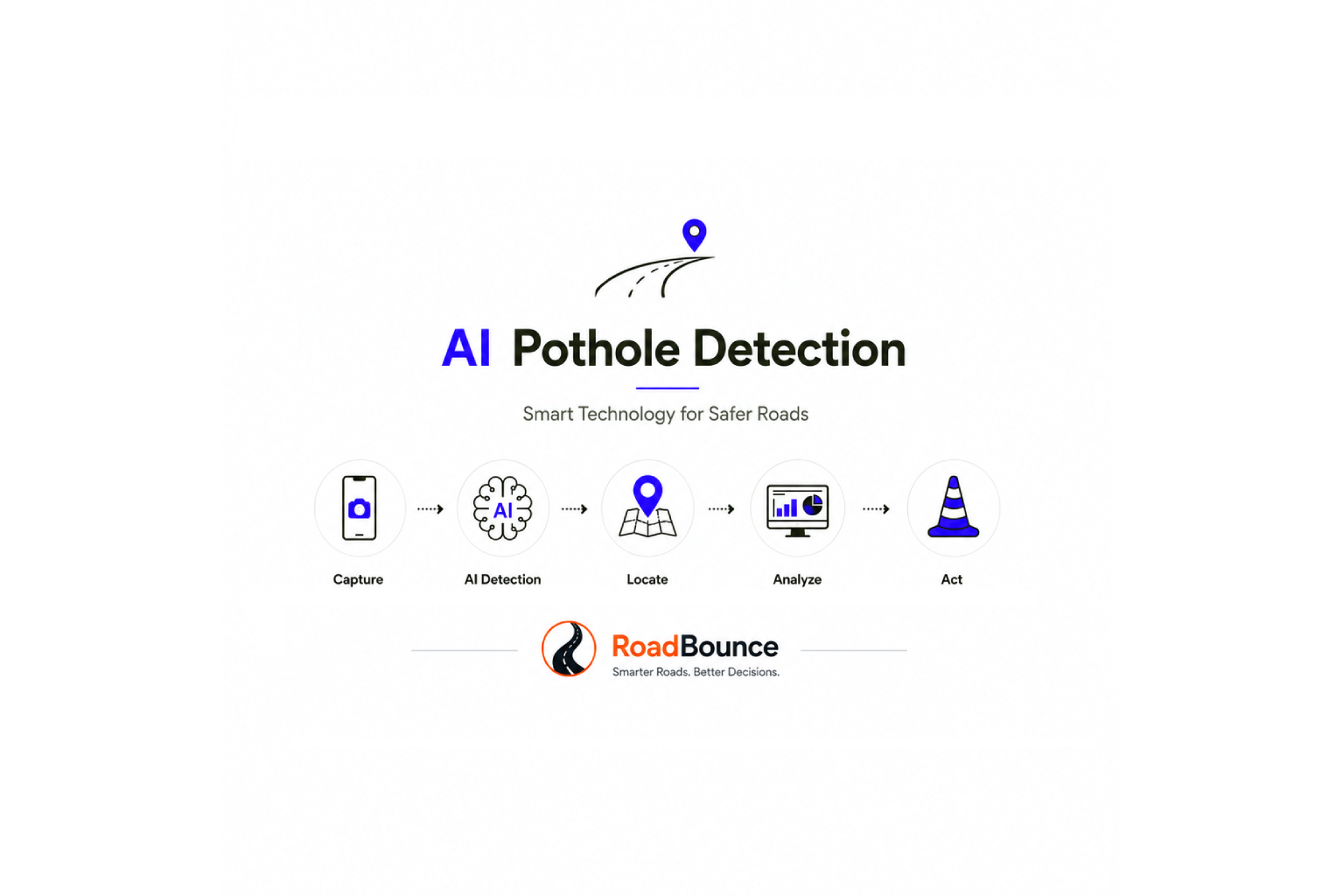
- AI-assisted visual pavement inspections
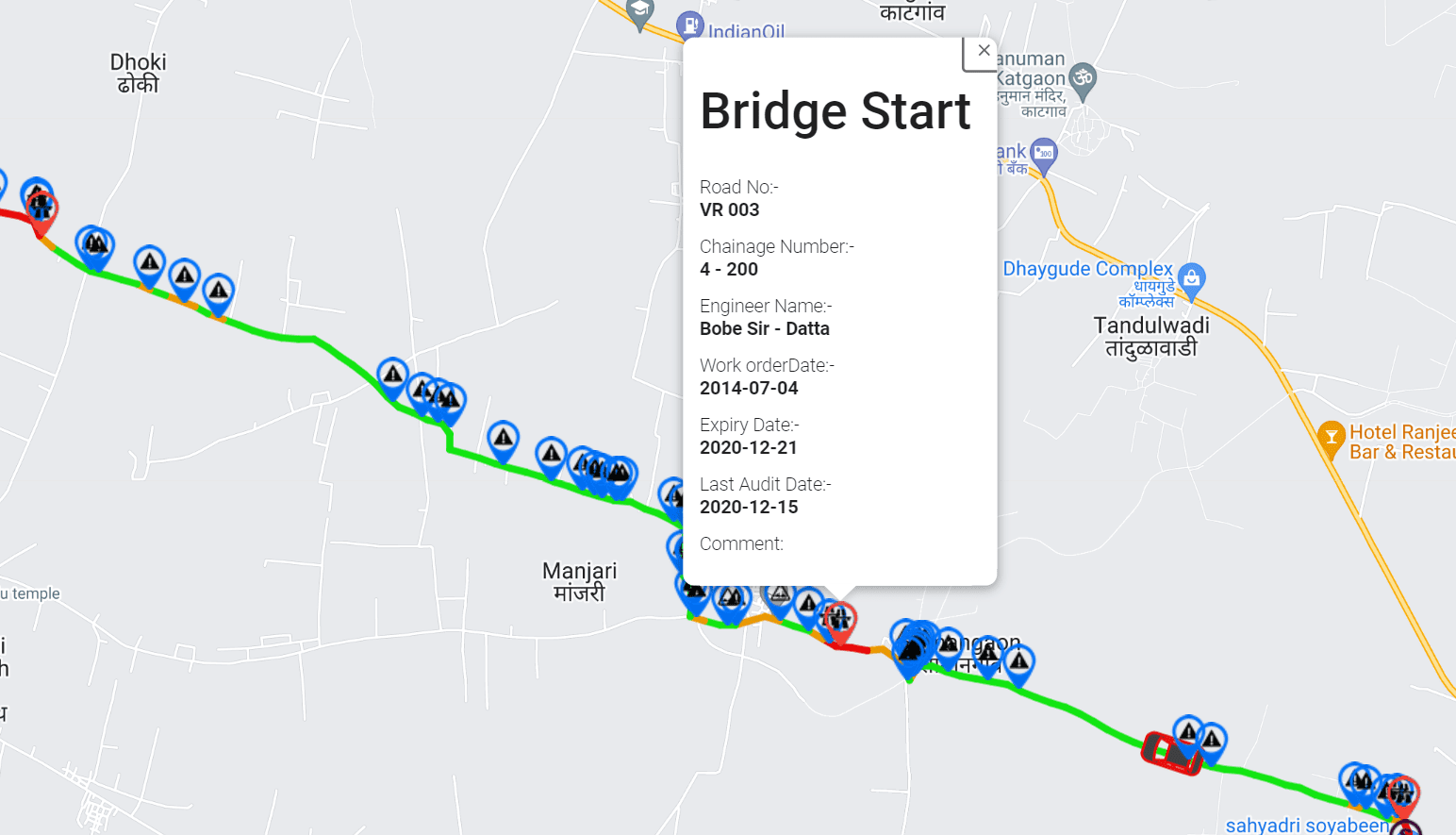
- GIS-based road condition mapping
- Recurring road assessments
- Deterioration monitoring
- Maintenance prioritization
- Infrastructure condition intelligence
The result is a broader understanding of where attention may be required across the network.
Combining IRI, AI Visual Inspection, and GIS
Road condition is multidimensional.
A single measurement cannot necessarily describe the complete condition of a road.
RoadBounce can combine different types of road condition information to support network-level analysis.
IRI Measurements
International Roughness Index (IRI) provides an established way to characterize longitudinal road roughness.
Monitoring IRI over time can help identify changes in ride quality and highlight sections that may warrant further investigation.
AI-Powered Visual Inspection
Visual data can provide additional information about surface conditions and visible pavement distress.
AI-assisted analysis can help identify potential issues such as:
- Potholes
- Cracks
- Surface defects
- Road-edge problems
- Other visible pavement conditions
GIS Mapping
Condition information becomes significantly more useful when connected to geographic location.
GIS-based mapping can help road managers visualize:
- High-priority corridors
- Deteriorating sections
- Pothole concentrations
- Roughness patterns
- Historical condition changes
- Maintenance locations
Together, these data sources can create a more comprehensive picture of road network condition.
Continuous Monitoring Can Reveal Deterioration Trends
A single road survey provides a snapshot.
Recurring monitoring provides a trend.
This distinction is important for pavement management.
For example, a road section may currently have moderate roughness. That measurement alone does not explain whether the pavement is stable or deteriorating rapidly.
Repeated assessments can help answer:
Is the road condition improving, remaining stable, or deteriorating?
Trend information can support more informed decisions about when to investigate or intervene.
For heavily trafficked roads, recurring monitoring can be particularly useful because deterioration may progress faster than on lightly trafficked routes.
Network Screening vs. Engineering Validation
An important distinction must be made between network screening and engineering validation.
Network Screening
RoadBounce is designed to support network-scale monitoring and screening.
Its role can include:
- Assessing large road networks
- Identifying potentially problematic locations
- Monitoring changes over time
- Supporting maintenance prioritization
- Helping identify locations for further investigation
This allows road organizations to develop a broader understanding of network condition.
Engineering Validation
Traditional road profiling and specialized engineering survey equipment remain valuable for detailed investigations.
Engineering-grade profilers can provide highly detailed measurements for applications where engineering validation and project-specific measurements are required.
These technologies should not be viewed as competing systems.
Instead, they can form part of a tiered road assessment strategy:
Network-wide screening → Priority identification → Detailed engineering investigation → Maintenance or rehabilitation
RoadBounce can help determine where specialized engineering resources may need to be deployed, while traditional profilers remain valuable for detailed engineering assessment.
A Smarter Workflow for Heavy-Traffic Road Networks
For road agencies managing extensive networks, a practical monitoring workflow can look like this:
Step 1: Survey the Network
Collect road condition information across priority corridors using scalable smartphone-based surveys.
Step 2: Identify Deterioration
Analyze ride quality and visible pavement conditions to identify potentially deteriorating sections.
Step 3: Map the Results
Use GIS to visualize condition patterns geographically.
Step 4: Prioritize Locations
Combine condition information with traffic importance, road classification, maintenance history, and other relevant asset data.
Step 5: Investigate Priority Sections
Deploy specialized engineering surveys where detailed validation is required.
Step 6: Plan Maintenance
Use the resulting information to support preventive maintenance, rehabilitation planning, and resource allocation.
Step 7: Monitor Again
Repeat assessments to understand how road conditions change over time.
This creates a feedback loop rather than a one-time inspection process.
Why Continuous Road Monitoring Matters for Infrastructure Owners
Road networks are dynamic assets.
Traffic changes.
Weather changes.
Pavement ages.
Maintenance interventions occur.
New defects appear.
A road condition database that is updated only occasionally can quickly become outdated.
Continuous or recurring monitoring can help infrastructure owners maintain a more current understanding of their network.
This can support:
Earlier awareness → Better prioritization → More targeted investigation → Better maintenance planning
The objective is not simply to collect more data.
It is to collect actionable infrastructure intelligence.
Turning Road Condition Data Into Maintenance Priorities
A large road network can generate enormous amounts of condition data.
The challenge is converting that data into decisions.
Road agencies can combine condition measurements with other asset information to establish maintenance priorities.
Potential factors include:
| Factor | Why It Matters |
|---|---|
| Road roughness | Indicates changes in ride quality |
| Pothole concentration | Highlights localized surface deterioration |
| Cracking | Can indicate progressive pavement distress |
| Traffic volume | Helps understand exposure to repeated loading |
| Heavy vehicle traffic | Important for understanding pavement loading |
| Road classification | Helps determine network importance |
| Historical condition | Shows deterioration trends |
| Maintenance history | Provides intervention context |
| Location | Supports GIS-based prioritization |
| Deterioration rate | Helps identify changing pavement condition |
The exact prioritization methodology should be adapted to the requirements, standards, asset strategy, and risk framework of each road organization.
Heavy Traffic Makes Monitoring More Important, Not Less
High-traffic roads typically have greater operational importance.
When pavement deterioration occurs on a major freight corridor, urban arterial, bus route, or strategically important road, the consequences can extend beyond the pavement itself.
Poor road condition can affect:
- Travel comfort
- Vehicle operating conditions
- Maintenance requirements
- Traffic operations
- Road-user experience
- Infrastructure expenditure
This makes systematic monitoring particularly valuable for heavily trafficked networks.
Rather than waiting for deterioration to become highly visible, road managers can use recurring condition assessments to understand how the network is changing.
RoadBounce: Infrastructure Intelligence for Network-Scale Monitoring
RoadBounce is designed around a simple principle:
Large road networks need scalable ways to understand changing road conditions.
Its smartphone-based approach enables road agencies, consultants, contractors, and infrastructure owners to collect condition information across networks without treating every road section as a detailed engineering survey.
By combining road condition measurements, visual inspection capabilities, GIS mapping, and recurring monitoring, RoadBounce can support a data-driven pavement management workflow.
It can help organizations:
- Monitor more of their road network
- Identify potential deterioration earlier
- Track road condition over time
- Prioritize maintenance activities
- Identify locations requiring detailed investigation
- Optimize deployment of specialized survey resources
- Build a more current picture of network condition
RoadBounce is therefore best understood as a network screening and infrastructure intelligence platform, rather than a replacement for specialized engineering profiling.
Conclusion
Heavy traffic is an important contributor to pavement deterioration, particularly when combined with existing pavement weaknesses, moisture, poor drainage, environmental stresses, and inadequate maintenance.
Potholes are often the visible result of a much longer deterioration process involving cracking, water infiltration, weakening, deformation, and repeated traffic loading.
For road agencies and infrastructure owners, the challenge is to identify deterioration early enough to make informed maintenance decisions.
Network-wide and recurring road monitoring can help bridge that gap.
RoadBounce provides a smartphone-based approach to road condition screening, combining ride quality measurements, AI-assisted visual inspection, GIS mapping, and recurring monitoring to support infrastructure intelligence and maintenance prioritization.
Traditional profilers remain valuable for detailed engineering investigations and validation. Smartphone-based monitoring can complement these technologies by helping organizations understand the broader network and identify where more specialized assessment may be required.
Ultimately, effective pavement management is not just about finding potholes after they form. It is about continuously understanding road condition, recognizing deterioration trends, and directing engineering and maintenance resources where they can have the greatest practical value.

Leave a Reply