
Potholes are among the most visible and costly signs of road deterioration. They contribute to vehicle damage, increase accident risks, disrupt traffic, and create growing maintenance backlogs for road authorities worldwide. As transportation networks expand and budgets remain constrained, relying solely on manual inspections or periodic engineering surveys makes it difficult to identify road defects quickly enough.
Artificial Intelligence (AI) is changing this landscape by enabling faster, smarter, and more scalable road condition monitoring. Combined with smartphone-based sensing, computer vision, GIS mapping, and cloud analytics, AI pothole detection helps agencies monitor entire road networks continuously and prioritize maintenance based on real-world conditions.
Rather than replacing engineering-grade road profilers or validation surveys, AI-powered road monitoring complements traditional pavement management programs by providing network-wide screening and recurring infrastructure intelligence. Solutions such as RoadBounce empower road agencies, municipalities, consultants, and contractors to identify deterioration earlier, optimize maintenance planning, and deploy specialized engineering surveys where they are needed most.
Why Pothole Detection Matters
Potholes develop when pavement begins to deteriorate under the combined effects of traffic loading, water infiltration, temperature changes, and aging materials. Small surface defects can rapidly evolve into larger failures if they are not identified and repaired early.
Delayed pothole repairs can result in:
- Increased vehicle repair costs
- Higher accident risks for motorists, cyclists, and pedestrians
- Reduced ride quality
- Faster pavement deterioration
- Higher long-term rehabilitation costs
- Increased public complaints
- Reduced road network performance
The challenge is not simply repairing potholes—it is detecting them across thousands of kilometers of roads before they become major infrastructure failures.
Traditional Pothole Inspection Challenges
Many transportation agencies still depend on:
- Manual visual inspections
- Public complaints
- Periodic engineering surveys
- Scheduled pavement condition assessments
While these methods remain important, they often have limitations when managing large road networks.
Some common challenges include:
- Limited Coverage
- Infrequent Assessments
- Reactive Maintenance
- Resource Constraints
These challenges have accelerated the adoption of AI-driven road condition monitoring technologies.
What Is AI Pothole Detection?
AI pothole detection uses artificial intelligence and computer vision to automatically identify pavement defects from roadway imagery and sensor data.
Modern systems analyze information collected during normal driving and identify:
- Potholes
- Surface cracking
- Edge deterioration
- Surface depressions
- Patch failures
- Utility cut failures
- Other pavement distress
Instead of requiring inspectors to manually review every road segment, AI processes large datasets quickly and consistently.
How AI Detects Potholes
Modern AI pothole detection systems combine multiple technologies.
1. Image Capture
Road imagery is collected using cameras mounted on smartphones or vehicles. Images continuously document pavement conditions while traveling through the road network.
2. Smartphone Motion Sensors
Smartphones contain accelerometers and gyroscopes that detect vehicle movement. Changes in vertical motion often indicate surface roughness, pavement irregularities, potential potholes, and ride quality changes.
3. Computer Vision
Deep learning models analyze roadway images and identify pavement defects. AI algorithms can recognize shape, texture, surface damage, cracking patterns, shadow characteristics, and distress boundaries.
4. Machine Learning Classification
Detected defects are categorized according to severity and confidence. This enables maintenance teams to distinguish between minor surface defects, moderate deterioration, and severe potholes requiring urgent attention.
5. GIS Mapping
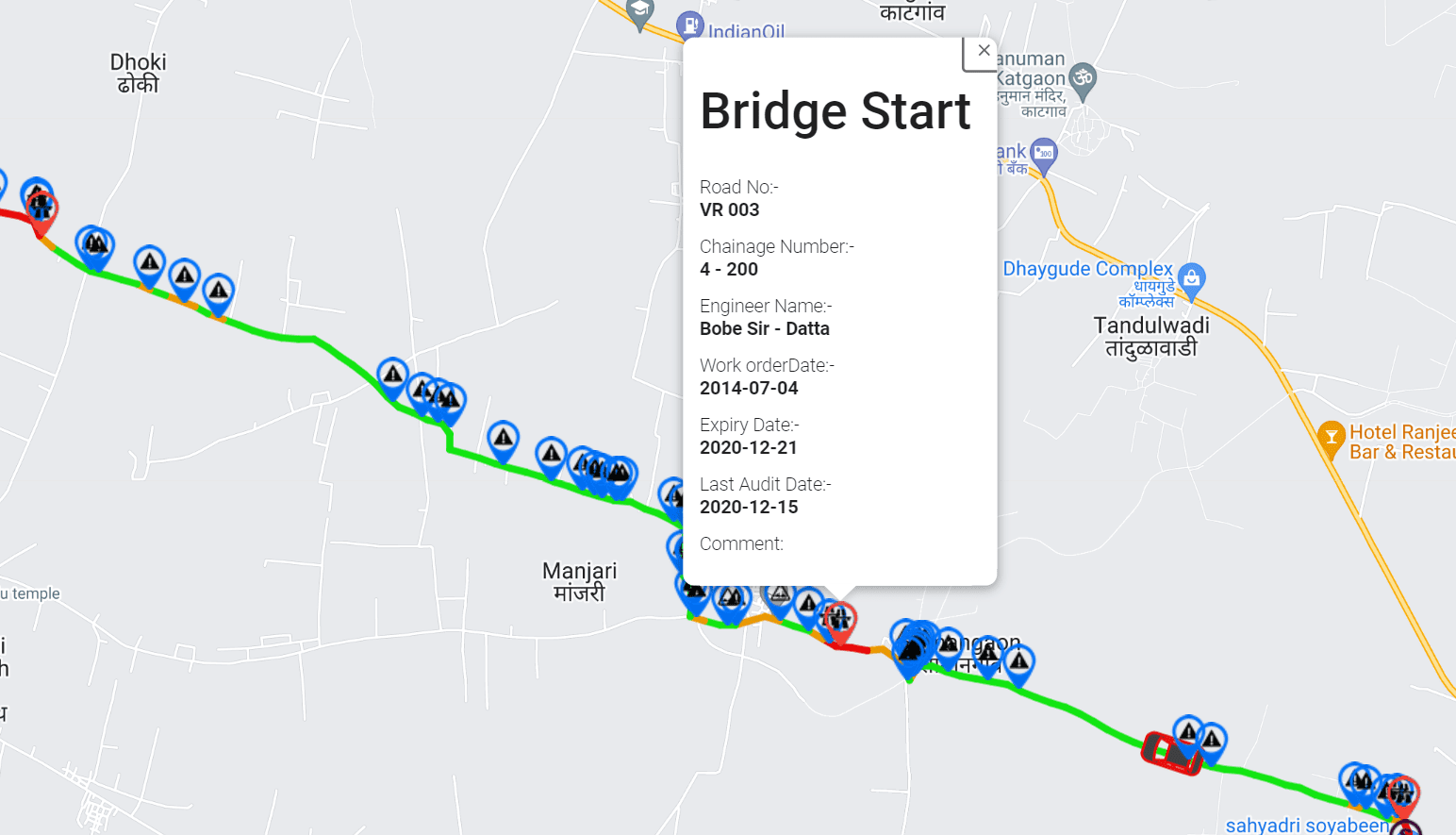
Every detected pothole is georeferenced using GPS. This allows agencies to visualize exact locations, defect density, high-risk corridors, maintenance zones, and historical trends.
GIS integration transforms isolated detections into actionable infrastructure intelligence.
Smartphone-Based AI Monitoring at Network Scale
One of the biggest advantages of modern road monitoring platforms is scalability.
Instead of deploying specialized survey vehicles across every roadway, smartphone-based systems can collect valuable network condition data using everyday vehicles.
RoadBounce combines:
- Smartphone ride quality measurements
- AI-powered visual pavement inspections
- GPS location tracking
- GIS visualization
- Cloud-based analytics
- Historical condition monitoring
This enables agencies to perform recurring road condition assessments across extensive transportation networks.
Continuous Monitoring Instead of One-Time Surveys
Road conditions constantly change.
Heavy rainfall, freeze-thaw cycles, construction activity, and increasing traffic loads can rapidly accelerate pavement deterioration.
Traditional engineering surveys remain valuable for detailed investigations, but they are typically conducted periodically.
Continuous smartphone-based monitoring enables agencies to:
- Detect deterioration sooner
- Monitor seasonal changes
- Compare road conditions over time
- Track maintenance effectiveness
- Update pavement inventories more frequently
Recurring assessments improve decision-making throughout the pavement lifecycle.
AI Helps Prioritize Maintenance Investments
Most agencies cannot repair every pothole immediately.
Maintenance budgets must be allocated strategically.
AI-supported road monitoring helps prioritize maintenance by considering:
- Defect severity
- Ride quality
- Geographic clustering
- Traffic importance
- Historical deterioration
- Network trends
This allows maintenance planners to address the most critical locations first while planning preventive treatments for emerging issues.
Supporting Preventive Maintenance
Preventive maintenance is one of the most cost-effective pavement management strategies.
Rather than waiting until roads require major reconstruction, agencies can intervene earlier.
AI road monitoring supports preventive maintenance by identifying:
- Early surface deterioration
- Increasing roughness
- Expanding crack networks
- Emerging pothole clusters
Early intervention often extends pavement life while reducing lifecycle costs.
Combining Ride Quality with AI Visual Inspections
Road condition cannot always be evaluated from images alone.
Similarly, ride quality measurements provide valuable information about pavement performance that may not be immediately visible.
RoadBounce combines:
- Smartphone-based ride quality measurements
- AI visual pavement analysis
- GIS location intelligence
- Historical monitoring
- Network analytics
This multi-source approach provides a broader understanding of pavement conditions across large road networks.
Improving Road Asset Management
Modern infrastructure management depends on reliable, recurring data.
AI pothole detection contributes to road asset management by helping agencies:
- Build comprehensive pavement inventories
- Monitor asset performance
- Evaluate maintenance outcomes
- Forecast deterioration
- Support capital planning
- Improve infrastructure transparency
The result is more informed investment decisions across the entire transportation network.
Complementing Traditional Road Profilers
Traditional road profilers continue to play a vital role in pavement engineering.
They remain the preferred choice for:
- Detailed engineering investigations
- Acceptance testing
- High-precision pavement analysis
- Engineering validation surveys
- Construction quality assurance
Smartphone-based monitoring solutions serve a different purpose.
RoadBounce supports network-wide screening and continuous monitoring, helping agencies identify where detailed engineering investigations should be focused.
Rather than replacing specialized profiling equipment, RoadBounce complements traditional road profiling programs by enabling more frequent, scalable infrastructure assessments and helping optimize the deployment of engineering survey vehicles.
This combination delivers both broad network visibility and detailed engineering insight.
Benefits of AI Pothole Detection
Organizations adopting AI-powered road monitoring can benefit from:
- Faster identification of pavement deterioration
- Continuous road condition monitoring
- Reduced dependence on manual inspections
- Improved maintenance prioritization
- Better allocation of maintenance budgets
- Enhanced GIS-based infrastructure visibility
- Data-driven pavement management
- More proactive maintenance planning
- Scalable monitoring across large road networks
- Better support for long-term asset management
Who Benefits from AI Pothole Detection?
AI-powered road monitoring is valuable for:
- Road Agencies — Monitor large road networks efficiently while improving maintenance planning.
- Municipalities — Track local streets, prioritize repairs, and improve public safety.
- Highway Authorities — Identify network-wide deterioration trends across regional transportation corridors.
- Infrastructure Consultants — Support pavement condition assessments with recurring monitoring data.
- Contractors — Monitor road conditions before and after maintenance activities to support project planning and quality reviews.
- Asset Managers — Use continuous road intelligence to guide long-term infrastructure investment decisions.
The Future of Intelligent Road Monitoring
Artificial intelligence is rapidly transforming how transportation agencies manage infrastructure.
Future road monitoring systems will increasingly combine:
- AI-powered pavement distress detection
- Smartphone sensor analytics
- Real-time GIS dashboards
- Predictive maintenance models
- Cloud-based infrastructure intelligence
- Automated reporting
- Digital pavement inventories
These technologies will help agencies shift from reactive maintenance toward proactive, data-driven asset management.
Why RoadBounce Is Built for Smarter Network Monitoring
RoadBounce provides a scalable approach to road condition monitoring by combining smartphone technology, AI-powered visual inspections, ride quality measurements, GIS mapping, and infrastructure analytics.
Instead of replacing traditional engineering surveys, RoadBounce helps agencies monitor extensive road networks more frequently, identify emerging pavement issues earlier, and prioritize locations for detailed engineering investigation.
By complementing established pavement evaluation methods with continuous network screening, RoadBounce enables transportation organizations to make better-informed maintenance decisions, optimize infrastructure investments, and improve road safety across the networks they manage.
Conclusion
AI pothole detection is reshaping road maintenance by enabling transportation agencies to monitor road conditions more frequently, detect deterioration earlier, and make data-driven maintenance decisions.
While traditional road profilers remain essential for detailed engineering validation and acceptance testing, smartphone-based monitoring platforms such as RoadBounce provide a practical way to screen entire road networks continuously and identify where specialized investigations are most valuable.
By combining AI visual inspections, ride quality measurements, GIS mapping, and recurring condition assessments, RoadBounce delivers actionable infrastructure intelligence that supports preventive maintenance, smarter asset management, and safer roads for everyone.


Leave a Reply