
Water is one of the most significant factors contributing to road pavement deterioration. While traffic loading, temperature fluctuations, and construction quality all influence pavement performance, inadequate drainage can accelerate structural damage and significantly increase the likelihood of pothole formation.
Road surfaces are designed to withstand repeated vehicle loads and environmental exposure. However, when water accumulates on the pavement, enters surface cracks, or becomes trapped within underlying pavement layers, it can gradually weaken the road structure. Over time, this weakening creates conditions that allow small pavement defects to develop into larger failures, including potholes.
For road authorities, municipal corporations, highway operators, and infrastructure asset managers, understanding the relationship between drainage conditions and pothole formation is essential for effective pavement maintenance.
Identifying drainage-related deterioration early can help agencies move beyond reactive pothole repairs towards proactive, data-driven road maintenance strategies.
In this article, we explore how drainage problems contribute to pothole formation, the common warning signs of water-related pavement damage, and how smartphone-based road monitoring solutions such as RoadBounce support network-wide pavement condition assessments.
1. Why Proper Road Drainage Is Essential for Pavement Performance
Road drainage systems are designed to collect and remove water from pavement surfaces and surrounding road infrastructure. Their primary purpose is to prevent water from accumulating on the carriageway or penetrating pavement layers.
An effective drainage system typically includes:
- Cross slopes and camber to direct surface water towards road edges.
- Side drains and roadside channels to collect runoff.
- Stormwater inlets and catch basins to manage water flow.
- Culverts to allow water to pass beneath roads.
- Subsurface drainage systems to remove water trapped within pavement structures.
- Properly designed shoulders and embankments to prevent water accumulation.
When these components function correctly, water is directed away from the pavement, reducing exposure to moisture-related deterioration.
However, blocked drains, inadequate gradients, damaged drainage infrastructure, and poor road construction practices can disrupt water movement.
The resulting water accumulation increases the risk of pavement deterioration, particularly on roads exposed to heavy traffic, frequent rainfall, and changing environmental conditions.
2. How Poor Drainage Leads to Pothole Formation
Potholes rarely develop without underlying pavement deterioration. In many cases, water plays a major role in weakening the pavement structure before visible surface failures appear.
Several interconnected mechanisms explain how drainage problems contribute to pothole formation.
2.1 Water Infiltration Through Pavement Cracks
Small pavement cracks provide entry points for rainwater and surface runoff.
When drainage is inadequate, water remains on the road surface for longer periods, increasing the opportunity for moisture to penetrate existing cracks and joints.
Once water enters the pavement, it can reach the asphalt layers, granular base, and subgrade.
Repeated exposure to moisture can weaken the bonding between pavement materials and reduce the supporting capacity of underlying layers.
As vehicles continue travelling over the affected area, repeated wheel loads place additional stress on the weakened pavement.
Eventually, the asphalt surface may begin to break apart, creating a pothole.
2.2 Weakening of the Pavement Subgrade
The subgrade is the underlying soil layer that supports the pavement structure.
Its strength is essential for distributing traffic loads and maintaining pavement stability.
When excessive moisture enters the subgrade, particularly in moisture-sensitive soils, its load-bearing capacity can decrease.
This may result in:
- Reduced soil strength.
- Increased deformation under traffic loading.
- Loss of pavement support.
- Differential settlement.
- Surface cracking and structural deterioration.
The problem becomes particularly serious when drainage systems cannot remove water effectively from beneath the pavement.
As the subgrade weakens, the pavement becomes more vulnerable to repeated traffic stresses. Cracks can expand, surface materials can become dislodged, and potholes may eventually develop.
2.3 Water-Related Damage to Asphalt Layers
Asphalt pavement consists of aggregates held together by a bituminous binder.
Water can affect the adhesion between the binder and aggregate, particularly when moisture penetrates the pavement structure.
This process is commonly associated with moisture-induced damage and stripping.
When stripping occurs, the bond between asphalt binder and aggregate weakens, reducing the integrity of the asphalt mixture.
Over time, affected pavement sections may experience:
- Loss of aggregate particles.
- Surface raveling.
- Increased cracking.
- Reduced pavement durability.
- Localised material disintegration.
Under repeated vehicle loading, these weakened sections can progressively break apart and develop into potholes.
2.4 Water Accumulation and Traffic Loading
Standing water on the road surface is not simply a drainage inconvenience. It can indicate an underlying problem with pavement geometry, surface condition, or drainage infrastructure.
Water accumulation often occurs in areas with:
- Inadequate cross slopes.
- Depressed pavement sections.
- Blocked roadside drains.
- Poorly maintained stormwater inlets.
- Uneven road surfaces.
- Settlement around utility trenches.
When vehicles repeatedly pass over these areas, the combination of traffic loading and moisture exposure can accelerate pavement deterioration.
Heavy commercial vehicles and buses can place particularly high stresses on pavement sections that have already lost structural support.
Over time, these combined effects can lead to cracking, deformation, surface breakup, and pothole formation.
2.5 Freeze-Thaw Cycles in Colder Regions
In regions experiencing freezing temperatures, water infiltration can create additional pavement deterioration risks.
When water trapped inside pavement cracks freezes, it expands and can place pressure on surrounding pavement materials.
As temperatures rise, the ice melts and leaves additional space for water to penetrate.
Repeated freeze-thaw cycles can gradually enlarge cracks and weaken pavement structures.
When traffic loads act on these weakened areas, pavement materials may break apart, resulting in potholes.
Although freeze-thaw damage is particularly relevant in colder climates, moisture-related pavement deterioration also occurs in tropical and monsoon regions through prolonged rainfall, water infiltration, and poor drainage.
3. Common Drainage Problems That Increase Pothole Risk
Not every pothole is caused by poor drainage alone. However, several drainage-related conditions can significantly increase pavement deterioration risks.
City of South Miami is Protecting the Biscayne Bay with Stormwater Filters — SOP Technologies – Environmental Solutions
Damaged road with rain water
Damage of asphalt road
12
| Drainage problem | Impact on pavement |
|---|---|
| Blocked roadside drains | Causes water accumulation along road edges. |
| Inadequate road camber | Prevents effective surface water runoff. |
| Damaged culverts | Disrupts water movement beneath roads. |
| Poor shoulder drainage | Allows water to accumulate near pavement edges. |
| Subsurface water accumulation | Weakens pavement foundation and subgrade. |
| Improper road elevation | Creates depressions where standing water collects. |
| Poor stormwater management | Increases exposure to prolonged water accumulation. |
These problems can occur individually or simultaneously, creating conditions that accelerate pavement deterioration.
For road maintenance teams, identifying these drainage-related risk areas is an important step towards reducing recurring pothole problems.
4. Warning Signs of Drainage-Related Pavement Deterioration
Drainage-related pavement damage often develops gradually. Recognising early warning signs allows road authorities to investigate affected sections before deterioration becomes more extensive.
Some of the most common indicators include:
Persistent Water Ponding
Water that remains on the road surface after rainfall may indicate inadequate drainage, surface depressions, or insufficient pavement gradients.
Recurring ponding locations deserve attention because prolonged moisture exposure can increase the likelihood of pavement damage.
Alligator Cracking
Alligator cracking consists of interconnected cracks resembling a reptile’s skin.
It is commonly associated with fatigue failure, inadequate structural support, or excessive loading. Water infiltration can accelerate deterioration when it reaches and weakens the underlying pavement layers.
Edge Cracking and Shoulder Deterioration
Road edges are particularly vulnerable when drainage is inadequate.
Water accumulating along the pavement shoulder can weaken supporting materials, contribute to erosion, and reduce lateral pavement support.
This can result in edge cracking, pavement breakup, and pothole formation.
Surface Raveling
Raveling occurs when aggregate particles gradually become detached from the asphalt surface.
Moisture damage can contribute to this process by weakening the bond between the asphalt binder and aggregates.
Repeated Pothole Formation
When potholes repeatedly develop in the same road section, simply filling the damaged area may not address the underlying problem.
Recurring failures can indicate unresolved drainage issues, inadequate pavement strength, or other structural deficiencies.
Investigating the surrounding pavement and drainage conditions is essential before selecting a long-term maintenance solution.
5. Why Traditional Pothole Repairs Often Fail When Drainage Problems Remain Unresolved
Pothole patching is an important part of routine road maintenance. However, repairing the visible surface damage does not necessarily resolve the underlying cause of pavement failure.
If water continues entering the pavement structure or accumulating beneath the road surface, the repaired section may deteriorate again.
For example, consider a road section where a blocked stormwater drain causes persistent water accumulation.
A maintenance team may fill an existing pothole using asphalt patching materials. The repair may temporarily restore the road surface, but the drainage problem remains.
As moisture continues affecting the pavement layers, the surrounding materials may weaken and another pothole may develop.
This creates a cycle of repeated maintenance interventions.
The long-term solution requires addressing both pavement damage and the underlying drainage condition.
Depending on the severity of deterioration, appropriate interventions may include:
- Clearing blocked drains and stormwater inlets.
- Restoring roadside drainage channels.
- Improving pavement cross slopes.
- Repairing damaged culverts.
- Installing or rehabilitating subsurface drainage.
- Reconstructing weakened pavement sections.
- Monitoring repaired locations for recurring deterioration.
Combining drainage maintenance with pavement condition assessments helps road agencies identify recurring problems and make more informed maintenance decisions.
6. The Importance of Network-Wide Road Condition Monitoring
One of the biggest challenges facing road authorities is identifying where pavement deterioration is developing across large road networks.
Traditional road inspections often depend on manual surveys, periodic visual assessments, and specialised survey vehicles.
While these approaches remain important, conducting frequent assessments across every road section can require considerable time, resources, and operational coordination.
This creates a monitoring challenge: pavement deterioration can develop between scheduled inspections, particularly during periods of heavy rainfall.
Network-wide road condition monitoring provides a more scalable approach.
By collecting road condition information across multiple routes and repeating assessments over time, road agencies can:
- Identify sections showing early signs of deterioration.
- Monitor changes in pavement ride quality.
- Detect visible pavement distress.
- Identify recurring pothole locations.
- Compare road conditions across different routes.
- Prioritise sections requiring maintenance inspections.
- Track pavement condition changes after repairs.
This approach shifts road maintenance planning from isolated inspections towards a broader understanding of infrastructure performance.
7. How RoadBounce Supports Early Identification of Pavement Deterioration
RoadScout: Turn Every Trip Into a Road Survey
roadscoutai.com
RoadBounce is a smartphone-based road condition monitoring and infrastructure intelligence platform designed to help road agencies, consultants, contractors, and infrastructure owners assess road networks at scale.
Instead of relying exclusively on infrequent road inspections, RoadBounce supports recurring road surveys using smartphone-based data collection.
Its approach combines multiple sources of road condition intelligence to help organisations understand how pavement conditions change over time.
7.1 Smartphone-Based Road Surveys
RoadBounce uses smartphone-based technology to collect road condition information while vehicles travel along surveyed routes.
This approach supports scalable road monitoring without requiring specialised survey vehicles for every routine network assessment.
Road agencies can use recurring surveys to develop a broader understanding of road conditions across their networks.
7.2 International Roughness Index (IRI) Monitoring
RoadBounce supports road ride-quality monitoring through IRI measurements.
The International Roughness Index is a widely used indicator of longitudinal road surface roughness.
Monitoring IRI across road sections can help infrastructure managers identify locations experiencing changes in ride quality.
In the context of drainage-related deterioration, worsening ride quality may indicate developing pavement irregularities, deformation, or surface damage.
However, IRI measurements alone cannot establish that poor drainage is the cause of pavement deterioration. Additional inspection and investigation may be necessary.
7.3 AI-Powered Visual Pavement Inspections
Navaantrix Pvt. ltd.
navaantrix.com
Visible pavement distress can provide important information about developing road maintenance requirements.
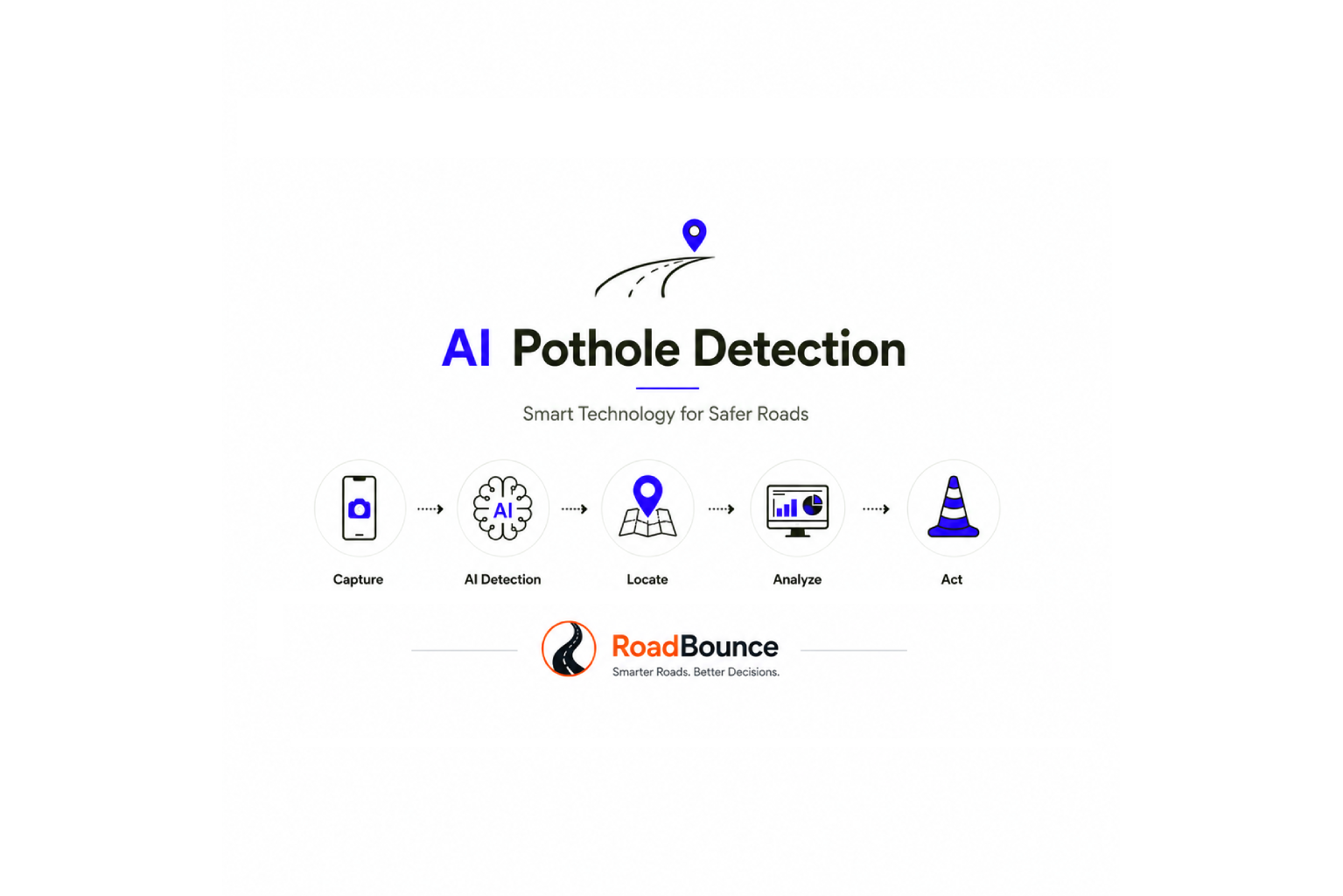
RoadBounce combines AI-powered visual inspection capabilities with road condition monitoring to support the identification of pavement defects.
Depending on the available imagery and detection capabilities, this can help identify visible issues such as:
- Potholes.
- Surface cracks.
- Pavement deterioration.
- Other visible road surface defects.
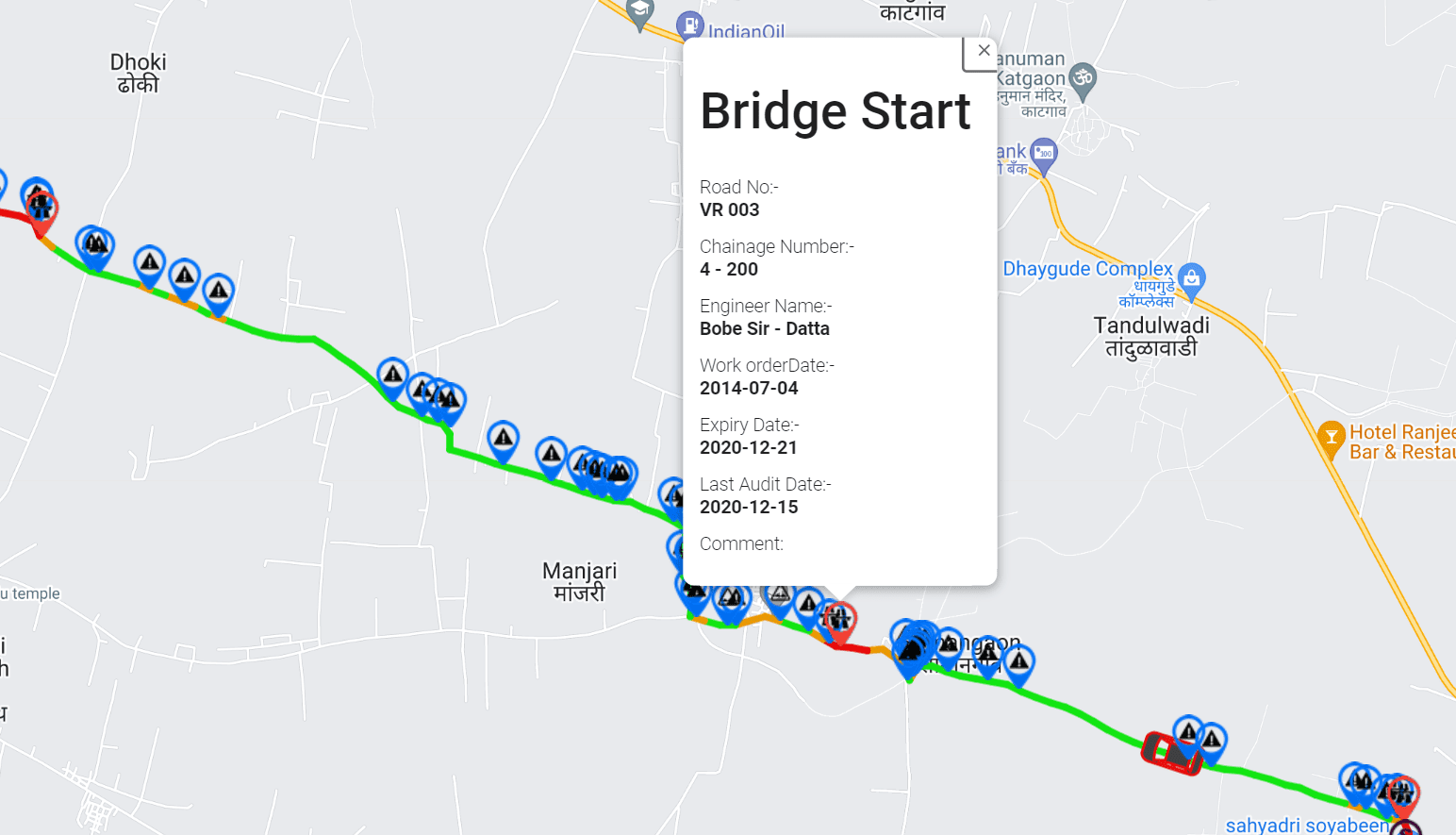
When these observations are mapped geographically, maintenance teams can investigate whether recurring pavement damage is concentrated around specific locations.
Drainage inspections can then help establish whether water accumulation or inadequate drainage contributes to the observed deterioration.
7.4 GIS Mapping and Road Asset Intelligence
Geographic Information System (GIS) integration helps connect road condition observations with their physical locations.
This is particularly valuable when multiple road sections experience recurring deterioration.
By mapping pavement condition information, road agencies can:
- Locate recurring pothole hotspots.
- Identify deteriorating road sections.
- Compare condition patterns across different routes.
- Support field inspection planning.
- Maintain historical road condition records.
- Prioritise areas requiring further investigation.
Combining GIS-based road condition information with drainage asset inventories can provide a more comprehensive picture of infrastructure risks.
7.5 Recurring Monitoring to Track Road Deterioration
A single road survey provides a snapshot of pavement conditions at a particular point in time.
Recurring surveys provide something more valuable: an opportunity to understand how those conditions change.
For example, road agencies can compare road condition observations collected before and after the monsoon season.
If a particular road section repeatedly develops potholes or shows worsening surface conditions, it can be flagged for further investigation.
This supports a more proactive maintenance approach, allowing agencies to identify potentially problematic locations before damage becomes more extensive.
8. Network Screening vs Engineering Validation: Understanding Their Different Roles
Effective pavement management requires different assessment technologies for different purposes.
Smartphone-based monitoring and traditional road profiling are complementary approaches rather than competing alternatives.
| Assessment approach | Primary purpose | Typical application |
|---|---|---|
| Smartphone-based monitoring (RoadBounce) | Network-wide road screening and recurring monitoring | Identifying deteriorating road sections and maintenance priorities. |
| AI-powered visual inspections | Identifying visible pavement distress | Detecting and mapping potholes, cracks, and other surface defects. |
| GIS-based road analytics | Spatial analysis of infrastructure conditions | Mapping defects and supporting maintenance planning. |
| Traditional laser and engineering-grade profilers | Detailed engineering measurements and validation | Investigating priority locations and supporting specialised engineering assessments. |
RoadBounce helps infrastructure managers understand where road conditions may be deteriorating and which locations deserve closer attention.
Traditional profilers remain valuable for detailed engineering investigations, while smartphone-based monitoring solutions provide cost-effective network-wide screening and continuous monitoring.
For example, if RoadBounce identifies a road section with worsening ride quality and visible pavement deterioration, the responsible agency can prioritise that location for a detailed engineering investigation.
Where required, specialised profiling equipment and other engineering surveys can then be deployed to evaluate the pavement in greater detail.
This combined approach helps organisations use specialised survey resources more strategically while maintaining appropriate engineering validation processes.
9. Integrating Drainage Inspections with Data-Driven Maintenance Planning
Pavement condition information becomes more valuable when considered alongside other infrastructure asset data.
Drainage infrastructure and road pavement systems are closely connected. Assessing them independently can make it difficult to understand the reasons behind recurring pavement failures.
An integrated maintenance strategy should consider:
- Road condition data
Monitor IRI measurements, visible pavement distress, pothole locations, and changes in road surface conditions. - Drainage infrastructure inspections
Inspect roadside drains, stormwater inlets, culverts, shoulders, and other drainage components for blockages, damage, and inadequate water flow. - GIS-based asset mapping
Connect road condition observations with drainage asset locations to identify areas where pavement deterioration and drainage deficiencies may overlap. - Maintenance prioritisation
Rank road sections according to deterioration severity, traffic importance, maintenance requirements, and potential infrastructure risks. - Recurring condition assessments
Repeat road surveys to evaluate whether maintenance interventions have improved pavement conditions or whether deterioration continues.
This integrated approach helps road authorities move towards preventive maintenance planning rather than relying entirely on reactive pothole repairs.
10. Benefits of Identifying Drainage-Related Road Deterioration Early
Early identification of drainage-related pavement problems can deliver several operational and financial benefits.
| Benefit | How it helps road agencies |
|---|---|
| Reduced recurring pothole repairs | Helps identify underlying drainage problems contributing to repeated pavement failures. |
| Better maintenance prioritisation | Directs resources towards road sections showing signs of deterioration. |
| Improved infrastructure visibility | Provides broader information about pavement conditions across road networks. |
| More efficient inspections | Helps identify locations requiring detailed field investigations. |
| Better budget allocation | Supports maintenance decisions using condition data and historical observations. |
| Improved preventive maintenance | Helps agencies identify deterioration before extensive pavement reconstruction becomes necessary. |
| Better asset management | Creates opportunities to track road condition changes over time. |
The objective is not simply to repair potholes after they appear. It is to understand the factors contributing to their formation and identify opportunities to intervene earlier.
11. Building a Proactive Approach to Pothole Prevention
Pothole prevention requires more than routine surface repairs.
Road agencies need to consider drainage performance, pavement structural conditions, traffic loading, construction quality, and environmental exposure when evaluating road deterioration.
A proactive road maintenance strategy should include:
- Regular inspection and cleaning of drainage infrastructure.
- Identification of recurring water ponding locations.
- Monitoring of pavement cracks and visible surface defects.
- Periodic road condition assessments across the network.
- GIS-based mapping of pavement deterioration.
- Prioritisation of high-risk road sections.
- Detailed engineering investigations where necessary.
- Follow-up surveys to evaluate maintenance effectiveness.
Smartphone-based road monitoring platforms can support this strategy by making recurring network assessments more scalable and helping infrastructure managers identify where additional investigation may be required.
By combining pavement condition monitoring with drainage inspections, road authorities can develop a more complete understanding of road network performance.
Conclusion: Better Drainage Management Starts with Better Road Intelligence
Poor drainage is an important contributor to pavement deterioration and pothole formation. When water accumulates on road surfaces or penetrates underlying pavement layers, it can weaken asphalt materials, reduce subgrade support, and accelerate structural damage.
Although potholes are often treated as isolated surface defects, recurring failures may indicate deeper drainage or pavement problems that require investigation.
For road authorities and infrastructure managers, addressing these challenges requires a combination of effective drainage maintenance, regular pavement inspections, and reliable road condition information.
RoadBounce supports this approach through smartphone-based road surveys, IRI monitoring, AI-powered visual inspections, GIS mapping, and recurring road condition assessments.
By providing scalable network-wide road intelligence, RoadBounce helps organisations identify deteriorating road sections, prioritise maintenance interventions, and determine where detailed engineering investigations are needed.
The future of effective pavement management is not just about repairing potholes. It is about understanding where roads are deteriorating, why they are deteriorating, and how to address those problems before they become more expensive to manage.
Explore how RoadBounce can support smarter road monitoring and data-driven pavement management at RoadBounce.

Leave a Reply