
Road infrastructure is one of the most valuable public assets, yet maintaining thousands of kilometers of roads remains a constant challenge for transportation agencies and infrastructure owners. Small pavement defects can rapidly evolve into dangerous potholes, increasing repair costs, damaging vehicles, and creating safety risks for motorists.
Artificial Intelligence (AI) is transforming the way road authorities identify and manage pavement deterioration. Rather than relying solely on periodic inspections, modern AI-powered road monitoring platforms enable continuous network-wide assessments, helping agencies detect issues earlier and prioritize maintenance where it matters most.
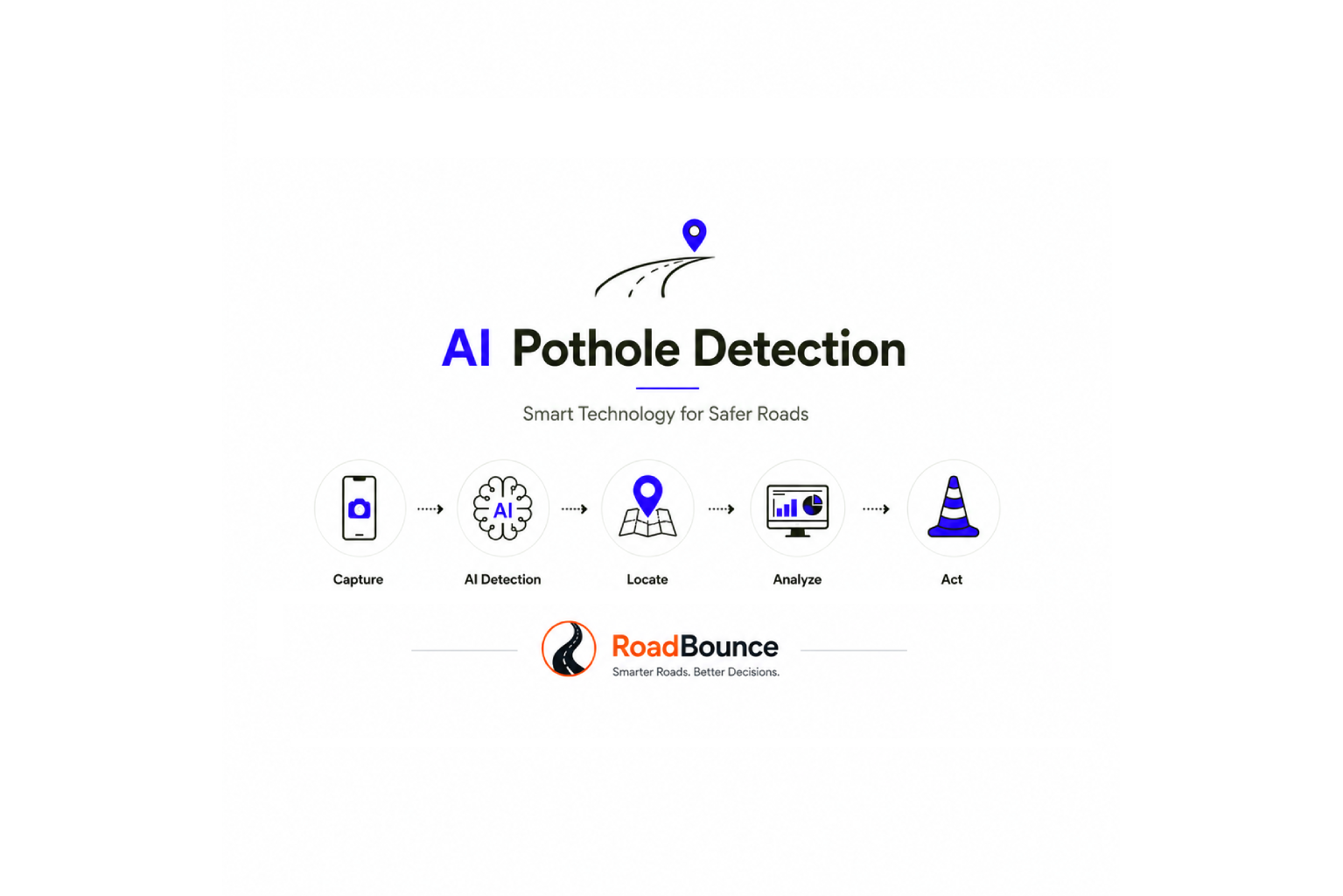
RoadBounce combines smartphone-based road condition monitoring, AI visual inspections, GIS mapping, and recurring data collection to provide scalable infrastructure intelligence. Instead of replacing engineering-grade surveys, it helps organizations monitor entire road networks more efficiently and identify locations that require further engineering investigation.
The Growing Challenge of Pothole Management
Potholes are rarely sudden failures. They typically develop through a gradual process:
- Small surface cracks allow water infiltration.
- Traffic loading weakens the pavement structure.
- Minor surface damage expands over time.
- Eventually, potholes form and create safety hazards.
Unfortunately, traditional visual inspections often occur only a few times each year, allowing many defects to worsen before maintenance crews become aware of them.
For agencies responsible for extensive road networks, manually inspecting every roadway frequently is both time-consuming and expensive.
This is where AI-powered road monitoring offers a significant advantage.
What Is AI Pothole Detection?
AI pothole detection uses computer vision and machine learning algorithms to automatically identify pavement defects from roadway images captured during routine driving.
Instead of requiring dedicated inspection vehicles for every assessment, smartphone-based technologies can collect road condition data while vehicles travel their normal routes.
The AI analyzes captured imagery to identify:
- Potholes
- Surface cracking
- Edge deterioration
- Surface deformation
- Localized pavement damage
- Other visible pavement distress
When combined with ride quality measurements and geographic location, agencies receive a comprehensive picture of pavement conditions across their road network.
How Smartphone-Based AI Makes Network Monitoring Scalable
One of the biggest challenges in pavement management is inspection frequency.
Road conditions change continuously due to:
- Heavy traffic
- Seasonal weather
- Water infiltration
- Freeze-thaw cycles
- Construction activities
- Utility works
Conducting engineering-grade surveys across an entire network every few months is often impractical due to cost and resource constraints.
RoadBounce addresses this challenge through smartphone-based road condition monitoring that enables organizations to collect data regularly across large road networks.
This approach supports:
- Continuous road condition monitoring
- Large-scale pavement screening
- Frequent infrastructure assessments
- Early deterioration detection
- Consistent historical tracking
Rather than replacing specialized survey vehicles, smartphone-based monitoring complements traditional road profiling programs by providing ongoing network intelligence between engineering surveys.
AI Helps Detect Problems Earlier
The earlier pavement deterioration is identified, the more maintenance options become available.
Minor defects can often be addressed through preventive maintenance techniques before they require extensive rehabilitation.
AI-powered monitoring helps agencies identify:
- Newly developing potholes
- Expanding pavement distress
- Areas experiencing rapid deterioration
- High-risk roadway sections
- Maintenance trends over time
Earlier detection enables maintenance teams to intervene before defects become larger, more expensive, and more hazardous.
Improving Road Safety Through Faster Detection
Potholes contribute to numerous road safety concerns, including:
- Vehicle damage
- Motorcycle accidents
- Bicycle hazards
- Loss of vehicle control
- Increased emergency maintenance
AI-assisted monitoring helps agencies become aware of developing issues sooner, allowing maintenance teams to prioritize repairs based on severity, location, and potential safety impact.
When road condition information is updated more frequently, transportation departments can make more informed maintenance decisions and respond proactively to emerging risks.
Supporting Data-Driven Maintenance Prioritization
One of the biggest challenges for road agencies is determining which roads should be repaired first.
Budget limitations often prevent every road from receiving immediate maintenance.
AI-powered infrastructure intelligence helps prioritize investments by combining multiple data sources, including:
- Ride quality measurements
- AI pavement distress detection
- Geographic location
- Historical condition trends
- Network-wide comparisons
- Recurring survey results
Instead of relying solely on subjective visual observations, agencies can use objective data to identify roads where maintenance is likely to deliver the greatest benefit.
Combining AI with Ride Quality Measurements
Visible pavement damage tells only part of the story.
Some road sections may appear relatively intact while delivering poor ride quality due to surface roughness or underlying structural issues.
RoadBounce combines AI visual inspections with smartphone-based ride quality measurements to provide a broader understanding of pavement conditions.
This integrated approach enables agencies to evaluate both:
- What the pavement looks like
- How the road performs from a ride quality perspective
The result is a more comprehensive assessment that supports better maintenance planning across the network.
GIS Mapping Creates Actionable Infrastructure Intelligence
Road condition data becomes far more valuable when combined with location intelligence.
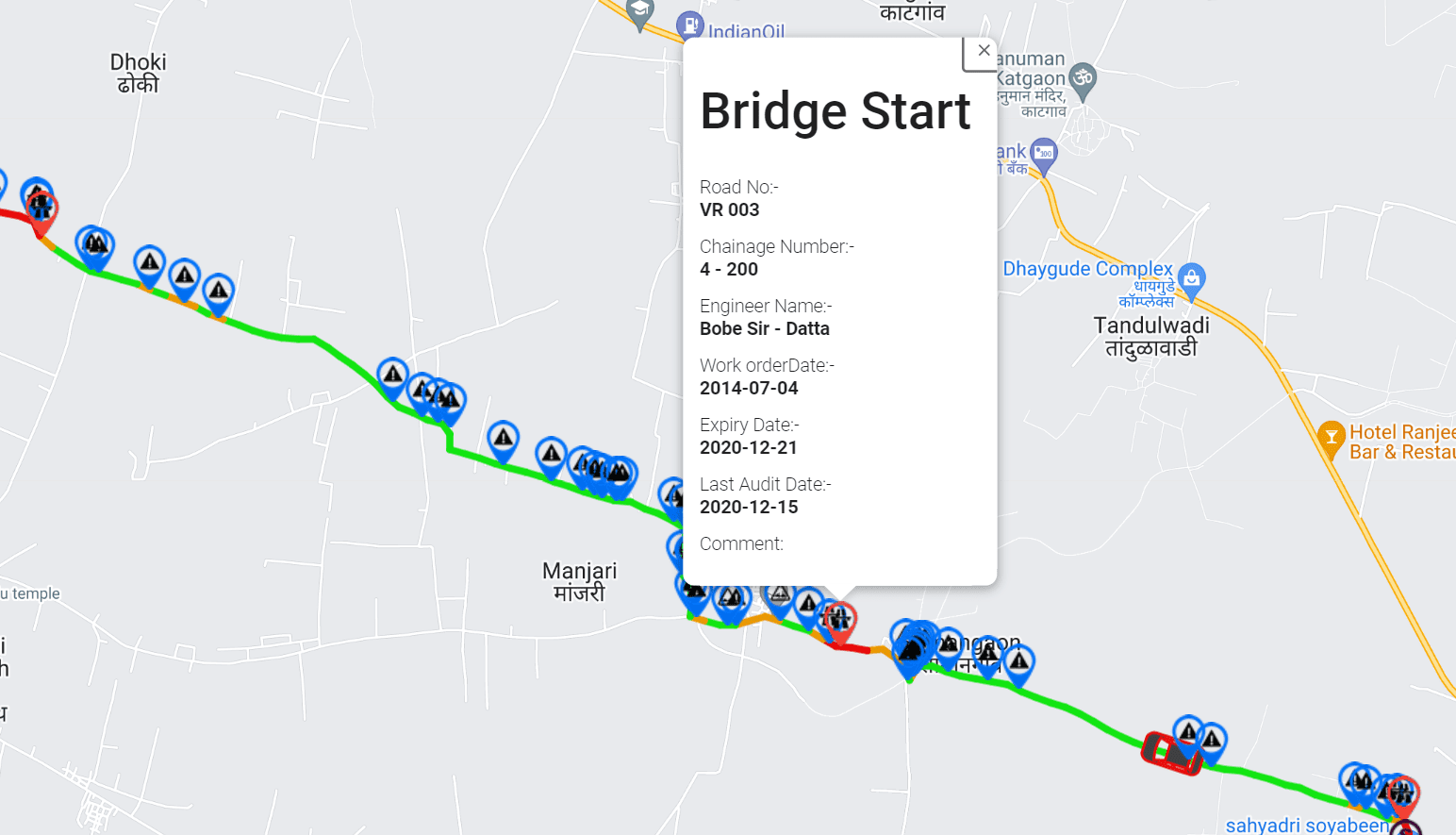
RoadBounce integrates survey results with GIS mapping, allowing infrastructure managers to:
- Visualize deteriorating road segments
- Identify maintenance hotspots
- Compare regional performance
- Track condition changes over time
- Plan maintenance geographically
Interactive mapping also improves communication between engineering teams, maintenance crews, contractors, and decision-makers.
Continuous Monitoring Supports Preventive Maintenance
Traditional inspection programs often provide only periodic snapshots of pavement conditions.
Continuous monitoring offers a different perspective by revealing how roads change over time.
Recurring assessments allow agencies to:
- Track deterioration rates
- Measure maintenance effectiveness
- Identify recurring problem areas
- Evaluate seasonal impacts
- Improve long-term pavement management strategies
This historical intelligence supports proactive maintenance planning rather than reactive repairs.
Complementing Traditional Road Profiling Programs
Traditional road profilers remain valuable for detailed engineering investigations, while smartphone-based monitoring solutions provide cost-effective network-wide screening and continuous monitoring.
RoadBounce is designed to complement—not replace—engineering survey technologies.
A practical workflow often looks like this:
- Network-wide screening: Smartphone-based surveys collect road condition data across the entire network.
- Priority identification: AI and ride quality analysis highlight locations showing signs of deterioration.
- Engineering validation: Specialized road profilers or detailed engineering investigations are deployed where higher-resolution data is required.
- Maintenance planning: Agencies use insights from both datasets to prioritize investments and schedule repairs.
This approach helps optimize the deployment of specialized survey vehicles while ensuring broader visibility into overall network conditions.
Benefits for Road Agencies and Infrastructure Owners
Organizations responsible for road infrastructure can benefit from AI-powered pothole detection by:
- Monitoring large road networks more frequently
- Collecting road condition data at scale
- Detecting deterioration earlier
- Supporting preventive maintenance programs
- Improving maintenance prioritization
- Enhancing GIS-based infrastructure management
- Tracking pavement performance over time
- Optimizing engineering survey resources
- Strengthening data-driven decision-making
These capabilities help agencies maintain better visibility across their infrastructure while making more informed maintenance investments.
The Future of Road Asset Management
As transportation networks continue to expand, agencies need scalable ways to monitor infrastructure without significantly increasing inspection costs.
AI-powered pavement monitoring, smartphone-based data collection, and infrastructure analytics are helping transform road asset management from reactive maintenance to proactive decision-making.
By combining recurring road condition assessments, AI visual inspections, ride quality measurements, and GIS-based analytics, organizations can build a more comprehensive understanding of pavement health across their networks.
Rather than replacing engineering-grade technologies, RoadBounce enables continuous infrastructure intelligence that helps agencies identify where detailed engineering investigations can deliver the greatest value.
Conclusion
AI pothole detection is reshaping how transportation agencies manage road infrastructure. By enabling continuous, network-wide monitoring and combining smartphone-based ride quality measurements with AI-powered visual inspections, RoadBounce helps organizations detect deterioration earlier, prioritize maintenance investments, and improve road safety.
Used alongside traditional engineering survey technologies, this approach provides a practical framework for smarter pavement management. Network-wide screening identifies emerging issues across large road systems, while detailed engineering investigations remain the next step for validation and project design. Together, these complementary capabilities support more efficient maintenance planning, better resource allocation, and a safer, more resilient transportation network.

Leave a Reply