
Road agencies, municipalities, contractors, and infrastructure owners face a common challenge: how to efficiently monitor the condition of thousands of kilometers of roadways while maintaining budgets and improving maintenance outcomes.
For decades, traditional road profilers have been the preferred solution for collecting detailed pavement performance data. These specialized systems provide highly detailed measurements that support engineering analysis, project acceptance testing, and pavement research.
However, as road networks continue to expand and infrastructure budgets become increasingly constrained, organizations are also exploring smartphone-based road monitoring technologies to improve network visibility and increase the frequency of road condition assessments.
This has led to an important industry discussion: Road Profiler vs Smartphone Monitoring — which approach delivers the best value?
The answer is not about choosing one over the other. Instead, it is about understanding how each technology serves a different purpose within a modern pavement management strategy.
Traditional profilers remain valuable for detailed engineering investigations, while smartphone-based monitoring solutions such as RoadBounce provide cost-effective network-wide screening and continuous monitoring.
Understanding Traditional Road Profilers
Road profilers are specialized vehicles or equipment systems designed to measure pavement surface characteristics and ride quality.
These systems commonly use:
- Laser sensors
- Accelerometers
- Distance measurement instruments
- Inertial reference systems
- High-precision data acquisition equipment
Road profilers are widely used for:
- Pavement engineering studies
- Acceptance testing
- Construction quality control
- Research projects
- Detailed pavement performance analysis
- Calibration and validation programs
Because of their precision and engineering-grade capabilities, profiler vehicles play an important role in pavement engineering and infrastructure management.
However, deploying profiler vehicles across an entire road network on a frequent basis can be challenging due to cost, logistics, and resource requirements.
What Is Smartphone-Based Road Monitoring?
Smartphone-based road monitoring uses sensors embedded within modern smartphones to collect road condition data while vehicles travel across the network.
Using accelerometers, GPS, AI-powered analytics, and cloud-based processing, platforms such as RoadBounce transform everyday vehicles into scalable road survey tools.
Instead of requiring specialized survey vehicles, agencies can collect data from:
- Fleet vehicles
- Maintenance vehicles
- Transit vehicles
- Contractor vehicles
- Inspection teams
- Regular network operations
This enables organizations to gather road condition information more frequently and across a much larger geographic area.
The objective is not to replace engineering-grade surveys but to create continuous visibility across an entire network.
Comparing Road Profilers and Smartphone Monitoring
1. Survey Coverage
Traditional Road Profilers
Road profiler surveys are often conducted periodically due to equipment costs, specialized operators, scheduling requirements, and survey logistics. As a result, agencies may only survey sections of the network annually or at longer intervals.
Smartphone Monitoring
Smartphone-based monitoring enables continuous data collection throughout routine operations. Benefits include more frequent assessments, greater network coverage, ongoing visibility into asset conditions, and faster identification of deteriorating roads.
2. Cost Efficiency
Traditional Road Profilers
Profiler programs often involve specialized survey vehicles, trained operators, equipment maintenance, calibration procedures, and dedicated survey schedules. These factors can increase the cost of network-wide assessments.
Smartphone Monitoring
RoadBounce leverages commercially available smartphones, reducing barriers to data collection. Advantages include lower deployment costs, scalable monitoring programs, broader geographic coverage, and increased survey frequency.
3. Data Collection Frequency
Traditional Profilers
Many agencies conduct profiler surveys annually, every few years, or during specific projects. While these surveys provide valuable engineering data, road conditions can change significantly between survey cycles.
Smartphone Monitoring
RoadBounce supports recurring monitoring programs that can collect data weekly, monthly, quarterly, or continuously. This frequent monitoring helps agencies identify deterioration trends earlier and respond before defects become major maintenance issues.
4. Accuracy and Purpose
Traditional Road Profilers are designed for detailed engineering measurements, high-precision pavement evaluation, construction acceptance testing, and technical investigations.
Smartphone Monitoring is designed for network-wide screening, ride quality monitoring, trend analysis, maintenance prioritization, and asset management support.
5. Maintenance Prioritization
RoadBounce supports maintenance prioritization by helping agencies detect deteriorating pavement segments, monitor ride quality changes, identify maintenance candidates, rank road sections by condition, and optimize maintenance investment decisions.
The Role of AI in Modern Road Monitoring
Modern pavement management increasingly relies on artificial intelligence to process large volumes of road condition data.
RoadBounce combines smartphone sensor measurements with AI-powered visual inspections to help identify potholes, cracking, surface distress, rutting indicators, and ride quality concerns.
GIS-Based Infrastructure Intelligence
Road condition data becomes significantly more valuable when integrated with geographic information systems (GIS).
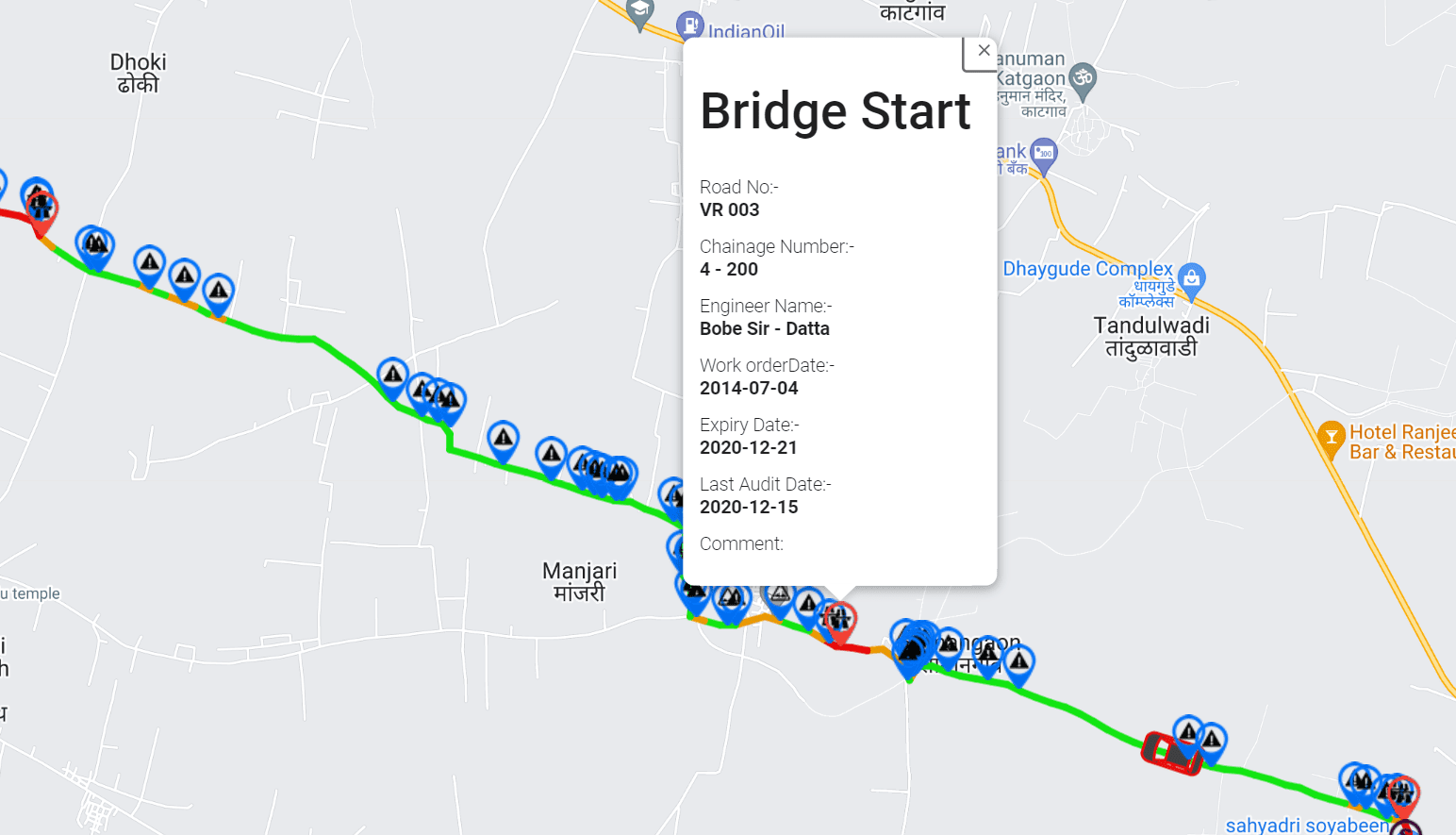
RoadBounce enables agencies to visualize road condition trends, network performance, maintenance priorities, geographic deterioration patterns, and asset condition maps.
RoadBounce and Traditional Profilers: Better Together
The most effective pavement management programs often combine multiple technologies.
A practical workflow may include:
- Step 1: Network-Wide Screening with RoadBounce – Monitor the entire network continuously using smartphone-based surveys.
- Step 2: Identify Priority Locations – Use condition trends, ride quality data, AI visual inspections, and GIS analytics to identify potential problem areas.
- Step 3: Deploy Detailed Engineering Surveys – Conduct targeted profiler surveys and engineering investigations where detailed analysis is required.
- Step 4: Optimize Maintenance Decisions – Use insights from both data sources to develop maintenance programs and allocate budgets effectively.
The Future of Pavement Management
As transportation agencies seek more efficient ways to manage aging infrastructure, the future of road condition monitoring will increasingly depend on scalable, data-driven technologies.
Continuous monitoring, AI-powered analytics, GIS integration, and smartphone-based data collection are enabling infrastructure managers to gain visibility across entire networks in ways that were previously difficult or cost-prohibitive.
Rather than replacing traditional road profiling programs, these technologies expand their effectiveness by helping agencies understand where detailed engineering resources should be focused.
Conclusion
When comparing road profilers and smartphone-based road monitoring, the most important consideration is not which technology is better—it is understanding how each technology contributes to a comprehensive pavement management strategy.
Traditional profilers remain essential for detailed engineering investigations, acceptance testing, and technical validation.
RoadBounce, meanwhile, provides scalable network-wide screening, continuous monitoring, AI-powered infrastructure intelligence, and cost-effective road condition assessments across large road networks.
Together, these approaches help agencies collect better data, prioritize maintenance more effectively, and make smarter infrastructure investment decisions.
For organizations seeking greater visibility across their road assets, smartphone-based monitoring represents a powerful addition to modern pavement management programs—delivering the network intelligence needed to support proactive, data-driven decision-making.


Leave a Reply