
Road agencies, consultants, and infrastructure owners face a common challenge: understanding the true condition of their road networks and determining where maintenance investments will deliver the greatest value. To make informed decisions, engineers rely on standardized pavement condition metrics that help quantify road performance and deterioration.
Among the most widely used indicators are the International Roughness Index (IRI) and the Pavement Condition Index (PCI). While both metrics assess pavement condition, they measure entirely different aspects of roadway performance and serve distinct roles in pavement management.
Understanding the differences between IRI and PCI is essential for developing effective maintenance strategies, prioritizing rehabilitation projects, and building data-driven asset management programs.
In this guide, we’ll explore how IRI and PCI work, their advantages and limitations, and why combining both measurements creates a more complete picture of road network health.
What Is IRI?
The International Roughness Index (IRI) is a globally recognized measure of road surface roughness and ride quality. It quantifies how smooth or rough a road feels to a vehicle traveling over it.
IRI is typically expressed in:
- Meters per kilometer (m/km)
- Inches per mile (in/mi)
Lower IRI values indicate smoother roads, while higher values suggest rougher pavement conditions.
What Does IRI Measure?
- Ride comfort
- Surface roughness
- Longitudinal pavement profile
- Vehicle response to road irregularities
Because it directly relates to user experience, IRI is widely used by transportation agencies to evaluate network performance and identify sections where ride quality is deteriorating.
Typical IRI Applications
- Monitor road network performance
- Track pavement deterioration trends
- Prioritize maintenance activities
- Assess ride quality over time
- Support pavement management systems
Today, smartphone-based monitoring platforms such as RoadBounce make it possible to collect IRI-related road condition data across large networks more frequently and cost-effectively than traditional survey schedules alone.
Importantly, smartphone-based monitoring supports network-wide screening and recurring assessments, helping agencies identify locations that may require further investigation. Detailed engineering validation can then be conducted using traditional profiling technologies where needed.
What Is PCI?
The Pavement Condition Index (PCI) is a numerical rating system that evaluates pavement condition based on visible surface distress.
PCI scores range from:
- 0 = Failed pavement
- 100 = Excellent pavement condition
Unlike IRI, which measures ride quality, PCI focuses on the type, severity, and extent of pavement defects.
What Does PCI Measure?
PCI assessments evaluate distress types such as:
- Cracking
- Potholes
- Rutting
- Raveling
- Patching
- Edge deterioration
- Surface deformation
Typical PCI Applications
- Pavement management programs
- Asset condition reporting
- Maintenance planning
- Rehabilitation budgeting
- Long-term infrastructure investment decisions
By identifying specific pavement defects, PCI helps engineers understand why a roadway is deteriorating and what maintenance treatments may be appropriate.
IRI vs PCI: The Fundamental Difference
The easiest way to understand the distinction is:
IRI measures how a road rides.
PCI measures how a road looks.
A pavement may have:
- A low PCI due to visible cracking but still offer a relatively smooth ride.
- A high PCI while experiencing roughness caused by settlement, uneven repairs, or structural issues.
Because each metric captures different dimensions of pavement condition, relying solely on one can lead to incomplete maintenance decisions.
IRI vs PCI Comparison Table
| Factor | IRI | PCI |
|---|---|---|
| Full Name | International Roughness Index | Pavement Condition Index |
| Measures | Ride quality and roughness | Surface distress and defects |
| Focus | Functional condition | Structural and visual condition |
| Data Source | Profile measurements | Visual inspections |
| Scale | Continuous roughness value | Score from 0–100 |
| Primary Purpose | Assess user ride experience | Evaluate pavement health |
| Monitoring Frequency | Suitable for recurring network monitoring | Often performed periodically |
Why Engineers Need Both IRI and PCI
Many agencies historically relied heavily on PCI surveys. However, modern pavement management programs increasingly combine both indicators to achieve a more complete understanding of road conditions.
Scenario 1: High PCI, Poor IRI
A road may appear visually acceptable with limited cracking or potholes. However:
- Settlement may create uneven ride quality.
- Utility cuts may introduce surface irregularities.
- Previous repairs may affect smoothness.
Scenario 2: Low PCI, Acceptable IRI
A pavement may exhibit:
- Surface cracking
- Minor raveling
- Early-stage distress
Yet still provide a comfortable ride experience.
Better Maintenance Decisions
Combining IRI and PCI allows agencies to:
- Detect deterioration earlier
- Understand pavement performance more comprehensively
- Prioritize maintenance more effectively
- Optimize rehabilitation budgets
- Improve long-term asset management outcomes
The Role of Smartphone-Based Road Monitoring
Traditional road condition surveys often face challenges related to cost, equipment availability, and survey frequency. RoadBounce enables organizations to:
- Collect road condition data across entire networks
- Measure ride quality indicators at scale
- Conduct recurring road assessments
- Monitor deterioration trends over time
- Identify maintenance priorities earlier
- Support pavement management programs with continuous data collection
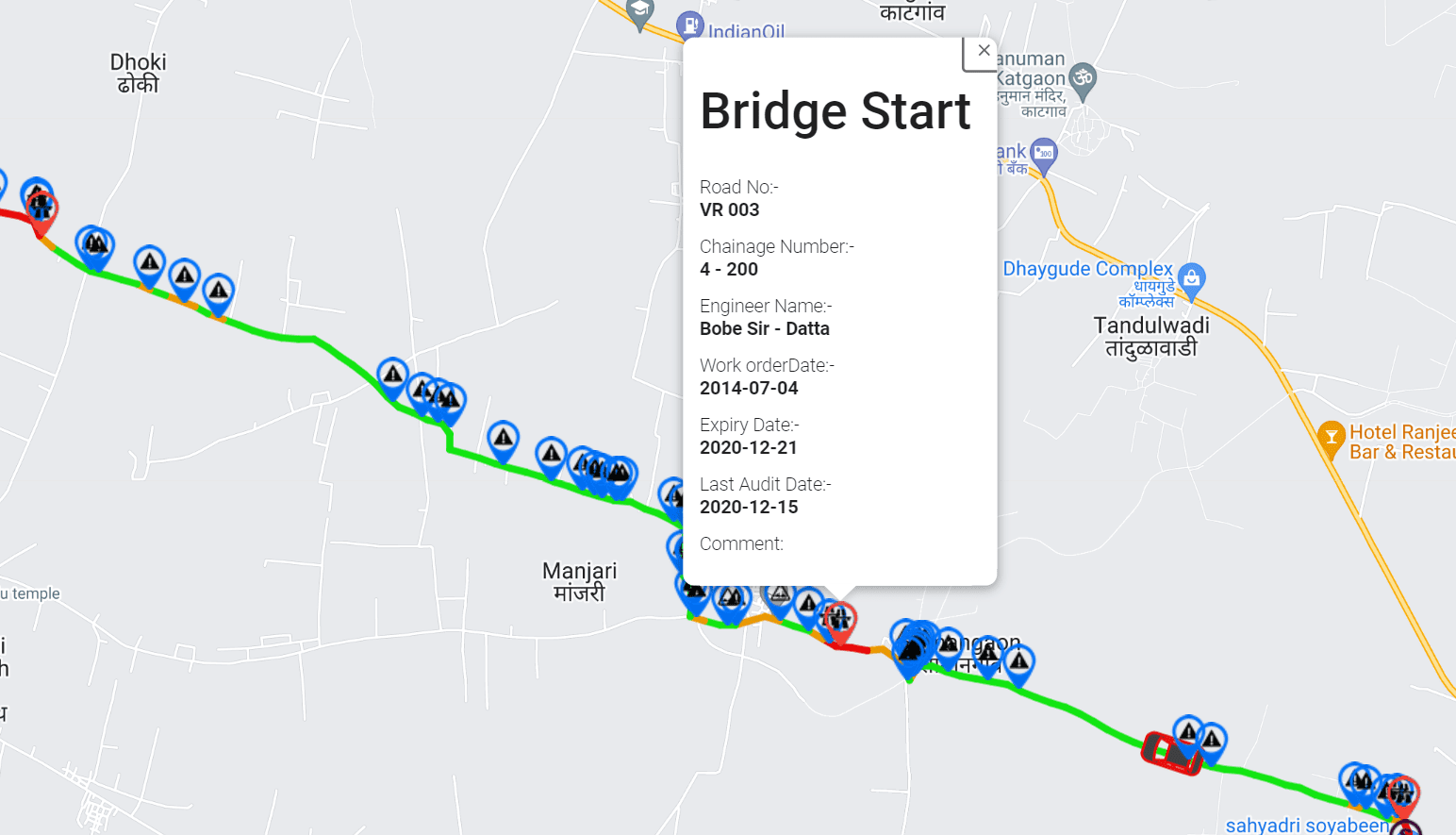
RoadBounce combines IRI-Based Ride Quality Monitoring, AI-Powered Pavement Distress Detection, GIS-Based Infrastructure Analytics, and Recurring Monitoring Programs.
Which Metric Is More Important?
The answer depends on the objective.
- Evaluate ride quality
- Track network performance
- Monitor deterioration trends
- Prioritize rough road segments
- Understand pavement distress
- Plan rehabilitation treatments
- Estimate maintenance requirements
Best Practices for Pavement Management Programs
Leading agencies increasingly adopt a layered approach:
- Step 1: Network-Wide Screening – Use scalable monitoring technologies to assess large road networks frequently.
- Step 2: Condition Assessment – Combine ride quality data, visual distress analysis, and asset information.
- Step 3: Engineering Validation – Deploy specialized survey equipment where needed.
- Step 4: Maintenance Prioritization – Allocate budgets based on risk, condition, traffic volumes, and network importance.
Conclusion
IRI and PCI are two of the most important pavement condition metrics used in modern infrastructure management, but they measure fundamentally different aspects of road performance. By combining ride quality monitoring, visual distress analysis, GIS intelligence, and recurring condition assessments, agencies can make more informed maintenance decisions. RoadBounce supports this transformation.


Leave a Reply