
Road infrastructure is the backbone of economic growth, urban mobility, and public safety. From highways and city roads to rural networks, maintaining high-quality road conditions is critical for efficient transportation and reduced lifecycle costs.
However, traditional inspection methods are no longer sufficient in today’s fast-paced, data-driven world. Manual surveys are time-consuming, inconsistent, and lack real-time insights. To better understand how modern technologies are transforming this space, explore this complete guide to road condition monitoring solutions by RoadBounce.
With advancements in Smart Road Technology, AI in Road Monitoring, and Automated Road Survey solutions, organizations can now monitor, assess, and maintain roads more efficiently than ever before.
What is a Road Condition Monitoring System?
A Road Condition Monitoring System is an advanced technological solution designed to evaluate, track, and analyze the condition of road infrastructure in real time.
It combines hardware and software to enable:
- Pavement Condition Assessment
- Road Surface Analysis
- Infrastructure Inspection Solutions
- Data-driven maintenance planning
Unlike traditional inspection methods, these systems rely on automation, sensors, and AI algorithms to deliver accurate, scalable, and actionable insights.
Key Functions
- Detect cracks, potholes, and surface damage
- Measure road roughness (IRI)
- Monitor structural integrity
- Generate maintenance recommendations
For a broader understanding of how these systems fit into the larger ecosystem, refer to this complete guide to road condition monitoring solutions.
How It Works (Step-by-Step Process)
A modern Road Infrastructure Monitoring system follows a structured workflow:
1. Data Collection
Specialized survey vehicles collect road data using:
- High-resolution cameras
- LiDAR systems
- GPS-enabled tracking
- Laser profiling tools
2. Data Processing
AI and machine learning analyze collected data:
- Image recognition detects defects
- Pattern analysis identifies deterioration
- Automated classification improves speed and accuracy
3. Road Surface Analysis
The system evaluates:
- Cracks and potholes
- Rutting and deformation
- Surface texture and roughness
4. Pavement Condition Assessment
Standard metrics are applied:
- Pavement Condition Index (PCI)
- International Roughness Index (IRI)
5. Reporting & Visualization
Insights are delivered through:
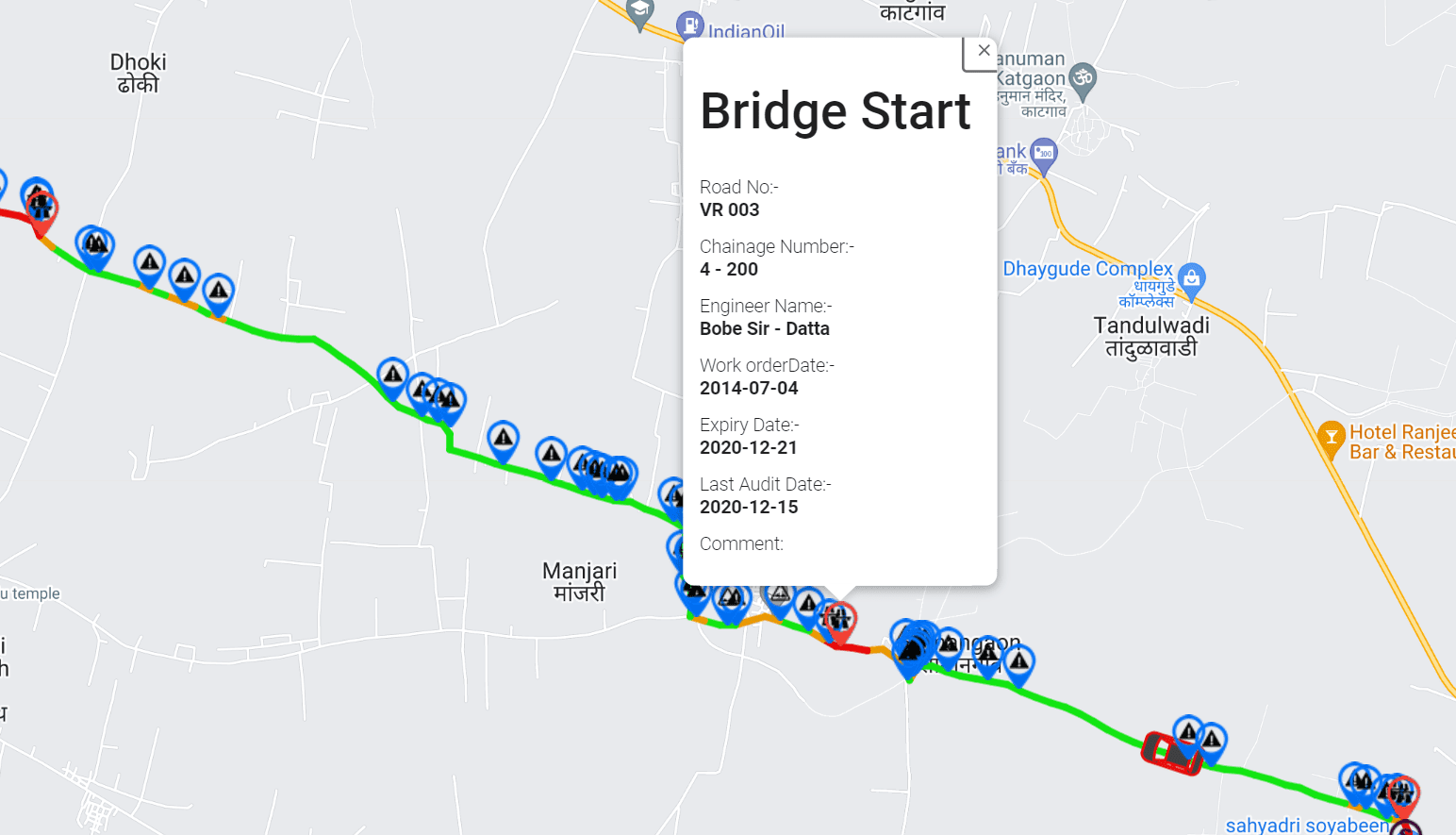
- GIS-based dashboards
- Heatmaps of damage
- Predictive maintenance reports
6. Decision-Making Integration
Authorities use these insights within Pavement Management Systems to optimize repair strategies and budgets.
Key Technologies Used
Modern Road Monitoring Systems rely on a combination of advanced technologies:
Artificial Intelligence (AI)
- Automates defect detection
- Improves accuracy over manual inspection
- Enables predictive analytics
Internet of Things (IoT)
- Real-time data collection
- Continuous monitoring through connected devices
LiDAR & Imaging Systems
- High-precision 3D mapping
- Detection of micro-level defects
Cloud Computing
- Centralized storage and access
- Scalable infrastructure for large networks
GPS & Geospatial Analytics
- Accurate defect location mapping
- Seamless GIS integration
Mobile & Vehicle-Based Sensors
- Accelerometers measure ride quality
- Laser profilers detect surface irregularities
These technologies together form the foundation of modern road monitoring solutions explained in detail in the pillar guide.
Benefits of Road Monitoring Systems
Implementing a Road Condition Monitoring System offers significant advantages:
Improved Accuracy
- Eliminates human error
- Ensures consistent data collection
Cost Efficiency
- Reduces unnecessary repairs
- Optimizes maintenance budgets
Time Savings
- Faster than manual inspections
- Covers larger areas efficiently
Predictive Maintenance
- Detects issues early
- Extends pavement lifespan
Enhanced Safety
- Identifies hazards quickly
- Reduces accident risks
Data-Driven Decisions
- Supports long-term infrastructure planning
- Improves asset management strategies
Why It Matters for Modern Infrastructure
With rapid urbanization and increasing traffic, maintaining road quality is becoming more complex. Traditional reactive maintenance approaches lead to higher costs and inefficiencies.
Smart Road Technology enables:
- Proactive maintenance strategies
- Real-time condition monitoring
- Sustainable infrastructure development
By shifting from reactive to predictive models, organizations achieve:
- Better road performance
- Lower lifecycle costs
- Improved user experience
In today’s smart city landscape, Infrastructure Inspection Solutions are essential—not optional.
Real-World Applications
Urban Road Networks
Cities use automated systems to manage high-traffic roads efficiently.
Highways & Expressways
Continuous monitoring ensures safety and performance optimization.
Rural Infrastructure
Governments maintain vast road networks with minimal resources.
Airport Runways
Precise surface analysis ensures aviation safety.
Smart Cities
Integrated systems provide real-time infrastructure insights.
Construction & Contractors
Supports quality control and compliance during project execution.
Future Trends in Road Monitoring
The future of AI-driven road monitoring includes:
- Autonomous inspection vehicles
- Advanced predictive analytics
- Digital twins of road infrastructure
- Smart city ecosystem integration
- Edge computing for real-time insights
- Sustainability-focused monitoring
These innovations will further enhance efficiency, accuracy, and scalability.
Key Takeaways
- Road Condition Monitoring Systems enable automated infrastructure assessment
- AI, IoT, and LiDAR drive precision and efficiency
- Supports predictive maintenance and cost optimization
- Essential for smart cities and modern infrastructure
- Future trends focus on automation and real-time intelligence
Conclusion
The shift toward data-driven infrastructure management is transforming how roads are monitored and maintained. A robust Road Condition Monitoring System is no longer a luxury—it’s a necessity for efficient, safe, and sustainable road networks.
Organizations adopting Smart Road Technology gain a competitive edge through better decision-making, reduced costs, and improved service delivery.
Want a deeper understanding of technologies, strategies, and implementation approaches? Explore the complete guide to road condition monitoring solutions to unlock advanced insights and take your infrastructure management to the next level.


Leave a Reply