
Road infrastructure is one of the most valuable public assets managed by transportation agencies, municipalities, contractors, and infrastructure owners. However, maintaining road networks efficiently requires one critical capability: understanding road conditions accurately, consistently, and at scale.
As road networks expand and budgets remain constrained, traditional inspection approaches often struggle to provide the frequency and coverage needed for proactive maintenance planning. This has led many organizations to adopt modern road condition monitoring systems that combine smartphone technology, artificial intelligence, GIS mapping, and infrastructure analytics to create a more scalable approach to pavement management.
This buyer’s guide explains everything decision-makers need to know when evaluating a road condition monitoring system, including key features, technology options, procurement considerations, and how to choose the right solution for long-term infrastructure management.
What Is a Road Condition Monitoring System?
A road condition monitoring system is a technology platform used to assess, track, analyze, and manage pavement conditions across a road network.
Modern systems help agencies and infrastructure owners:
- Measure road ride quality
- Monitor pavement deterioration trends
- Detect surface distresses
- Track asset conditions over time
- Support pavement management programs
- Prioritize maintenance investments
- Improve infrastructure planning decisions
Rather than relying solely on periodic manual inspections, today’s road monitoring platforms enable continuous and recurring assessments that provide ongoing visibility into network health.
The goal is not simply collecting data—it is transforming road condition information into actionable infrastructure intelligence.
Why Road Condition Monitoring Matters
Road deterioration is inevitable. The challenge is identifying problems before they become expensive failures.
Without continuous monitoring, agencies often face:
- Reactive maintenance programs
- Escalating repair costs
- Limited visibility into network conditions
- Difficulty prioritizing projects
- Inconsistent inspection coverage
- Budget allocation challenges
Effective road condition monitoring enables organizations to:
- Detect Deterioration Earlier
- Improve Maintenance Prioritization
- Optimize Infrastructure Investments
- Support Long-Term Asset Management
Key Components of a Modern Road Condition Monitoring System
When evaluating solutions, buyers should understand the major components that make up an effective monitoring platform.
1. Ride Quality Measurement
Ride quality is one of the most widely used indicators of pavement condition.
Modern monitoring systems use smartphone sensors to measure vehicle response and estimate road roughness across large networks.
Benefits include:
- Rapid data collection
- Scalable deployment
- Frequent assessments
- Consistent monitoring over time
Ride quality metrics help identify sections of roadway that may require additional investigation or maintenance planning.
2. AI-Powered Visual Inspections
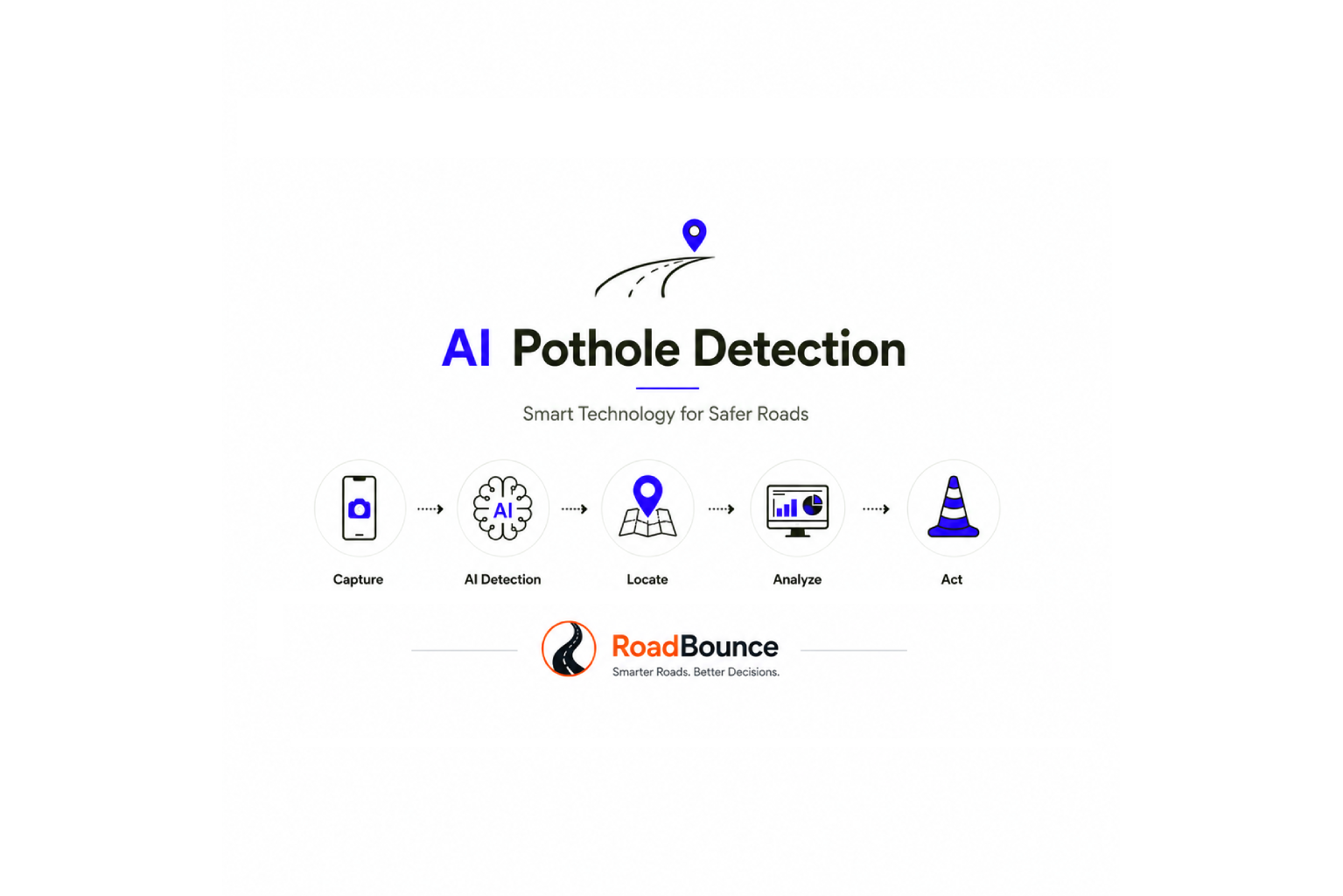
Artificial intelligence is transforming pavement condition assessment.
Using smartphone cameras and computer vision algorithms, modern systems can identify common pavement distresses such as:
- Cracking
- Potholes
- Surface defects
- Edge deterioration
- Pavement damage indicators
AI-driven inspections provide additional context beyond ride quality measurements, helping agencies understand both pavement performance and visible distress conditions.
3. GIS Mapping and Spatial Analytics
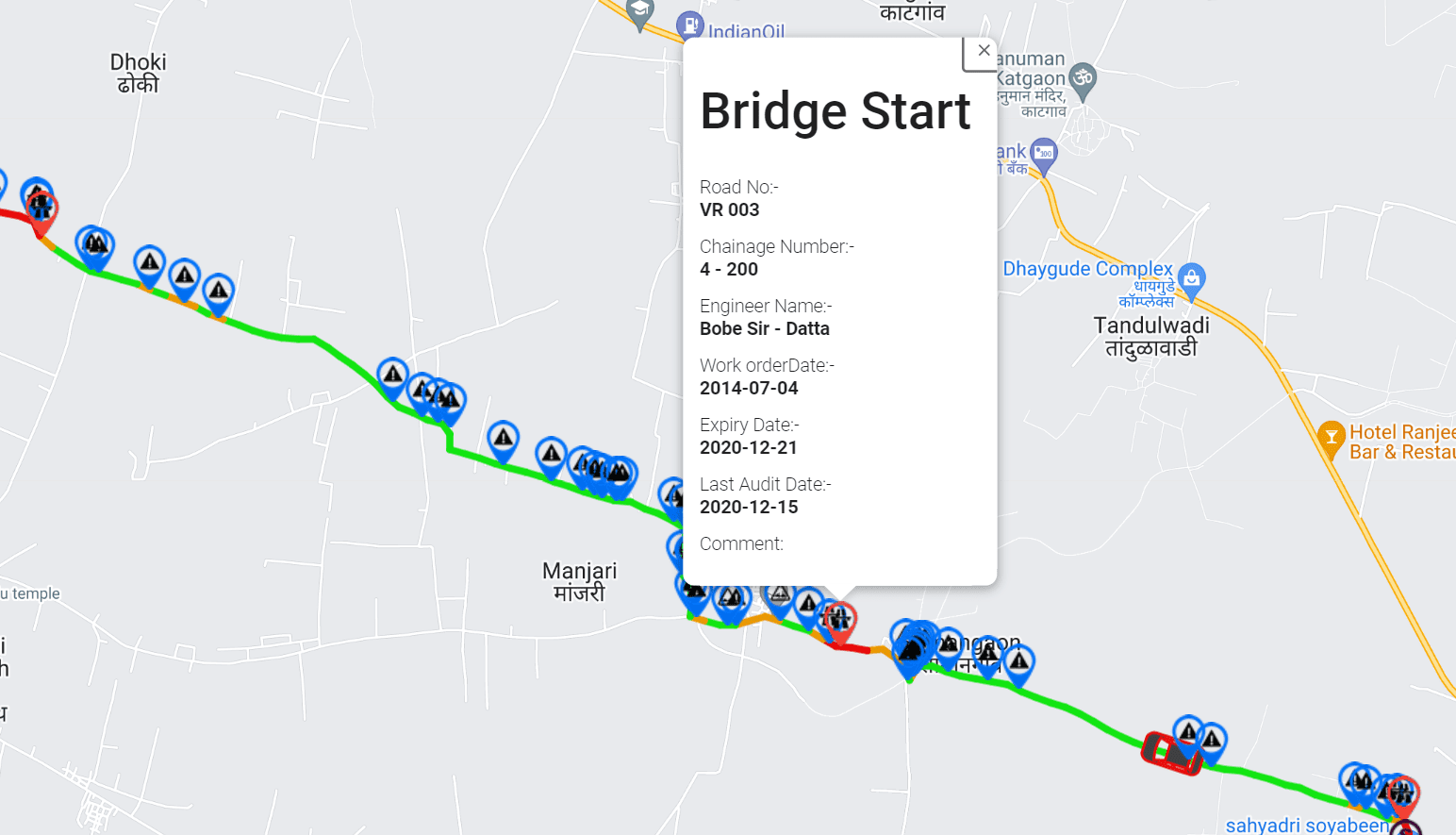
Road condition data becomes significantly more valuable when linked to geographic information systems (GIS).
GIS integration allows organizations to:
- Visualize road conditions geographically
- Identify deterioration hotspots
- Analyze network-wide trends
- Create maintenance planning maps
- Support asset management workflows
Interactive maps help stakeholders quickly understand infrastructure performance across entire road networks.
4. Historical Trend Analysis
Road condition monitoring is most effective when conducted repeatedly over time.
Trend analysis enables organizations to:
- Monitor deterioration rates
- Measure maintenance effectiveness
- Compare conditions year-over-year
- Forecast future asset performance
Recurring monitoring creates a continuous record of network health rather than relying on isolated inspections.
5. Reporting and Infrastructure Intelligence
Decision-makers need actionable insights, not just raw data.
An effective monitoring system should provide:
- Condition dashboards
- Asset performance reports
- Maintenance prioritization tools
- Executive summaries
- Network condition scoring
These capabilities help transform survey data into strategic infrastructure decisions.
Traditional Profilers vs. Smartphone-Based Monitoring
One of the most common questions buyers ask is how smartphone-based monitoring compares with traditional road profilers.
The answer lies in understanding the different objectives of each technology.
Traditional Profilers
Traditional road profilers remain valuable tools for:
- Detailed engineering investigations
- Engineering validation studies
- Project-level analysis
- Research applications
- Specialized pavement assessments
These systems provide highly detailed measurements used in engineering workflows and validation activities.
Smartphone-Based Monitoring Solutions
Smartphone-based monitoring platforms such as RoadBounce focus on:
- Network-wide screening
- Continuous monitoring
- Large-scale data collection
- Frequent condition assessments
- Infrastructure intelligence
- Maintenance prioritization
Instead of surveying only selected segments periodically, organizations can collect condition data across extensive road networks more frequently.
The Most Effective Strategy
The strongest pavement management programs often combine both approaches.
A smartphone-based monitoring platform can:
- Screen entire road networks
- Identify deteriorating locations
- Prioritize areas of concern
- Guide maintenance planning
Traditional profilers can then be deployed strategically for detailed engineering investigations where additional validation is required.
This complementary approach improves efficiency while maximizing infrastructure visibility.
What Features Should Buyers Look For?
When selecting a road condition monitoring system, organizations should evaluate several critical capabilities.
Scalability
Can the platform support:
- City-wide networks?
- State or provincial networks?
- National road programs?
- Multiple asset owners?
Scalability is essential for long-term deployment success.
Ease of Data Collection
Solutions that leverage smartphones reduce deployment complexity and allow organizations to collect data more frequently.
Key considerations include:
- Mobile app usability
- Vehicle compatibility
- Survey speed
- Training requirements
Artificial Intelligence Capabilities
Look for platforms that can:
- Detect pavement distresses
- Automate inspections
- Reduce manual review efforts
- Generate condition insights
AI capabilities can significantly improve operational efficiency.
GIS Integration
Mapping functionality should include:
- Spatial visualization
- Condition layers
- Asset overlays
- Maintenance planning maps
GIS integration enables better infrastructure decision-making.
Historical Monitoring
Road conditions change continuously.
Choose a system that supports:
- Recurring surveys
- Trend tracking
- Long-term analysis
- Deterioration monitoring
Historical visibility is critical for preventive maintenance planning.
Reporting and Analytics
Strong reporting capabilities should provide:
- Executive dashboards
- Asset condition reports
- Maintenance prioritization recommendations
- Custom reporting options
The objective is to turn data into actionable intelligence.
Benefits of Smartphone-Based Road Monitoring
Many organizations are moving toward smartphone-based monitoring because of its ability to support large-scale infrastructure management.
Key benefits include:
- Network-Wide Coverage
- Increased Survey Frequency
- Cost-Effective Monitoring
- Faster Decision-Making
- Improved Asset Management
Questions to Ask Vendors Before Purchasing
Before investing in a road condition monitoring system, consider asking:
- How is data collected?
- Does the platform support recurring monitoring?
- Are AI visual inspections included?
- What GIS capabilities are available?
- How are maintenance priorities generated?
- Can the system support large road networks?
- What reporting tools are included?
- How is historical data managed?
- Can condition trends be analyzed over time?
- How does the solution complement existing pavement management workflows?
The answers will help determine whether a platform aligns with organizational objectives.
Why RoadBounce Is Built for Modern Infrastructure Management
RoadBounce helps transportation agencies, consultants, contractors, and infrastructure owners monitor road networks more effectively through smartphone-based road condition monitoring.
The platform combines:
- Ride quality measurement
- AI-powered pavement distress detection
- GIS-based infrastructure mapping
- Historical trend analysis
- Recurring condition monitoring
- Infrastructure intelligence dashboards
Rather than focusing solely on isolated surveys, RoadBounce enables continuous network-wide visibility that supports smarter maintenance planning and asset management.
By identifying areas that require further attention, RoadBounce helps organizations prioritize resources and determine where more detailed engineering investigations may be warranted.
This network-screening approach complements traditional profiling programs and supports data-driven infrastructure decision-making at scale.
Conclusion
The future of pavement management depends on continuous visibility into road network conditions.
Organizations can no longer rely solely on infrequent inspections and reactive maintenance strategies. Modern road condition monitoring systems provide the infrastructure intelligence needed to detect deterioration earlier, prioritize maintenance investments, and improve long-term asset performance.
While traditional profilers continue to play an important role in detailed engineering investigations and validation activities, smartphone-based monitoring solutions offer a scalable way to monitor entire road networks continuously.
For agencies seeking to improve pavement management, optimize maintenance budgets, and build smarter infrastructure programs, a comprehensive road condition monitoring system is no longer a luxury—it is an essential component of modern asset management.

Leave a Reply