
Pavement flatness plays a critical role in determining how comfortable, safe, and durable a road surface will be throughout its service life. Whether it’s a newly constructed highway, an airport runway, an industrial pavement, or an existing road network, measuring pavement flatness helps engineers and infrastructure managers understand surface quality and identify areas requiring attention.
Traditionally, pavement flatness has been evaluated using specialized surveying equipment and high-precision road profilers during construction and engineering inspections. However, as transportation agencies increasingly manage thousands of kilometers of roadway with limited budgets, there is growing demand for scalable technologies that support continuous monitoring across entire road networks.
Today, smartphone-based road condition monitoring platforms such as RoadBounce complement traditional pavement assessment methods by enabling cost-effective network-wide screening, recurring condition monitoring, and infrastructure intelligence that helps agencies prioritize where detailed engineering investigations should be performed.
This guide explains pavement flatness measurement, common testing methods, industry standards, and how modern digital technologies are transforming pavement management.
What Is Pavement Flatness?
Pavement flatness refers to how closely a pavement surface conforms to its intended design without unwanted bumps, dips, waves, or surface irregularities.
A flatter pavement generally provides:
- Better ride comfort
- Improved driving safety
- Reduced vehicle operating costs
- Lower dynamic loading on pavement structures
- Longer pavement life
- Better drainage characteristics
- Reduced maintenance requirements
Flatness differs from smoothness, although the two terms are often used interchangeably.
- Flatness evaluates the geometric characteristics of the pavement surface.
- Smoothness reflects how drivers experience the pavement while traveling over it.
Road engineers use flatness measurements during construction quality control, pavement inspections, rehabilitation planning, and long-term asset management.
Why Pavement Flatness Measurement Matters
Accurate pavement flatness measurement supports better infrastructure decisions throughout a pavement’s lifecycle.
Construction Quality
Flatness measurements help contractors verify that newly constructed pavements meet project specifications before opening to traffic.
Ride Quality
Surface irregularities directly affect driving comfort, vehicle stability, and user satisfaction.
Pavement Performance
Uneven surfaces create concentrated loads that accelerate deterioration.
Preventive Maintenance
Early detection of surface deformation enables agencies to address issues before they become expensive structural failures.
Asset Management
Network-wide flatness information helps prioritize maintenance budgets based on actual pavement condition rather than age alone.
Common Causes of Poor Pavement Flatness
Several factors contribute to pavement surface irregularities.
Construction Issues
- Inconsistent paving speed
- P“`html
Pavement Flatness Measurement: A Complete Guide
Pavement flatness plays a critical role in determining how comfortable, safe, and durable a road surface will be throughout its service life. Whether it’s a newly constructed highway, an airport runway, an industrial pavement, or an existing road network, measuring pavement flatness helps engineers and infrastructure managers understand surface quality and identify areas requiring attention.
Traditionally, pavement flatness has been evaluated using specialized surveying equipment and high-precision road profilers during construction and engineering inspections. However, as transportation agencies increasingly manage thousands of kilometers of roadway with limited budgets, there is growing demand for scalable technologies that support continuous monitoring across entire road networks.
Today, smartphone-based road condition monitoring platforms such as RoadBounce complement traditional pavement assessment methods by enabling cost-effective network-wide screening, recurring condition monitoring, and infrastructure intelligence that helps agencies prioritize where detailed engineering investigations should be performed.
This guide explains pavement flatness measurement, common testing methods, industry standards, and how modern digital technologies are transforming pavement management.
What Is Pavement Flatness?
Pavement flatness refers to how closely a pavement surface conforms to its intended design without unwanted bumps, dips, waves, or surface irregularities.
A flatter pavement generally provides:
- Better ride comfort
- Improved driving safety
- Reduced vehicle operating costs
- Lower dynamic loading on pavement structures
- Longer pavement life
- Better drainage characteristics
- Reduced maintenance requirements
Flatness differs from smoothness, although the two terms are often used interchangeably.
- Flatness evaluates the geometric characteristics of the pavement surface.
- Smoothness reflects how drivers experience the pavement while traveling over it.
Road engineers use flatness measurements during construction quality control, pavement inspections, rehabilitation planning, and long-term asset management.
Why Pavement Flatness Measurement Matters
Accurate pavement flatness measurement supports better infrastructure decisions throughout a pavement’s lifecycle.
Construction Quality
Flatness measurements help contractors verify that newly constructed pavements meet project specifications before opening to traffic.Ride Quality
Surface irregularities directly affect driving comfort, vehicle stability, and user satisfaction.Pavement Performance
Uneven surfaces create concentrated loads that accelerate deterioration.Preventive Maintenance
Early detection of surface deformation enables agencies to address issues before they become expensive structural failures.Asset Management
Network-wide flatness information helps prioritize maintenance budgets based on actual pavement condition rather than age alone.Common Causes of Poor Pavement Flatness
Several factors contribute to pavement surface irregularities.
Construction Issues
- Inconsistent paving speed
- Poor screed adjustment
- Improper compaction
- Material segregation
- Equipment vibration
Foundation Problems
- Weak subgrade
- Differential settlement
- Moisture-related movement
Environmental Effects
- Freeze-thaw cycles
- Thermal expansion
- Heavy rainfall
- Flooding
Traffic Loading
- Heavy truck traffic
- Repeated axle loading
- Rut formation
Aging
- Fatigue cracking
- Surface deformation
- Oxidation
- Localized repairs
Common Pavement Flatness Measurement Methods
1. Straightedge Testing
The straightedge method remains one of the simplest techniques for measuring localized surface deviations.
Engineers place a straightedge across the pavement surface and measure deviations beneath it.
Advantages
- Simple
- Low cost
- Quick spot checks
Limitations
- Covers limited areas
- Not suitable for network-wide assessment
- Labor intensive
2. Rolling Straightedge
Rolling straightedges continuously measure deviations as they move along the pavement.
They are commonly used during construction quality assurance.
Benefits include:
- Continuous measurements
- Faster than static methods
- Useful for localized quality control
3. Inertial Road Profilers
High-speed inertial profilers use lasers, accelerometers, and distance measurement instruments to capture longitudinal pavement profiles.
These systems are widely used for:
- Engineering investigations
- Construction acceptance
- Research
- Highway performance evaluation
They provide highly detailed surface profiles suitable for calculating indices such as the International Roughness Index (IRI).
Traditional profilers remain valuable for detailed engineering investigations, while smartphone-based monitoring solutions provide cost-effective network-wide screening and continuous monitoring.
4. Total Stations and Digital Levels
Survey instruments provide extremely accurate elevation measurements.
These methods are often selected when:
- High precision is required
- Construction tolerances must be verified
- Detailed engineering analysis is necessary
However, surveying large road networks using these methods can be time-consuming and resource intensive.
5. 3D Laser Scanning
Three-dimensional laser scanning creates dense surface models capable of identifying:
- Surface waviness
- Rutting
- Settlement
- Texture variations
These systems are increasingly used for specialized engineering projects.
6. Smartphone-Based Road Monitoring
Recent advances in smartphone sensors, artificial intelligence, and cloud computing have enabled agencies to assess road conditions more frequently at a network scale.
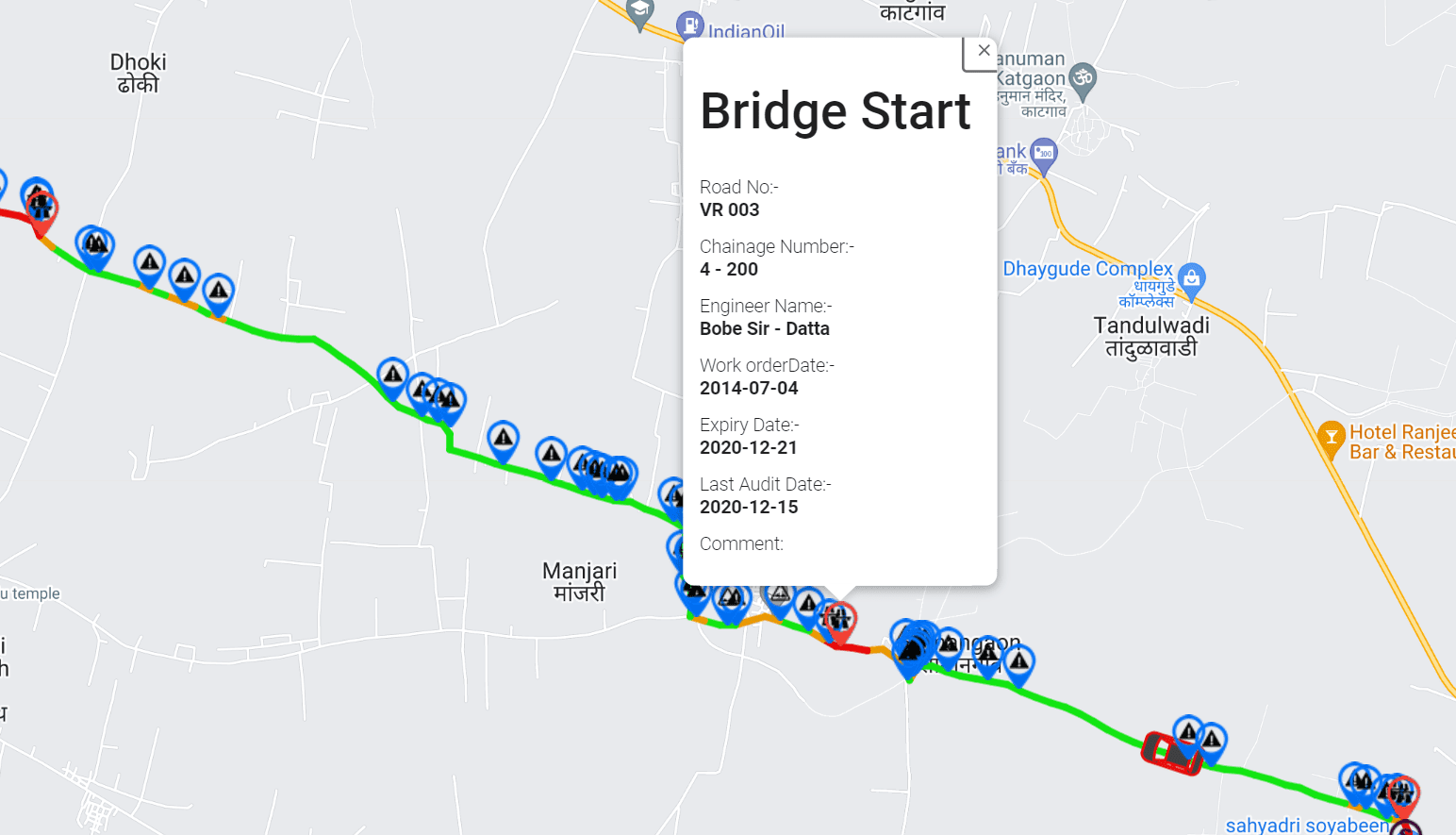
Platforms such as RoadBounce use smartphone-based data collection to measure ride quality, detect pavement deterioration, map road conditions using GPS, and support recurring network assessments.
Rather than replacing engineering-grade profilers, smartphone-based monitoring helps agencies:
- Screen entire road networks
- Monitor changing pavement conditions over time
- Identify emerging deterioration earlier
- Prioritize locations for detailed engineering investigations
- Optimize deployment of specialized survey vehicles
- Support data-driven pavement management
This scalable approach allows infrastructure owners to collect condition data far more frequently than traditional survey programs alone.
Understanding International Roughness Index (IRI)
One of the most widely used pavement performance indicators is the International Roughness Index (IRI).
IRI measures how road surface irregularities affect vehicle ride quality.
Lower IRI values generally indicate smoother pavements.
Higher values suggest increasing roughness and potential deterioration.
IRI is widely used for:
- Pavement management systems
- Highway performance monitoring
- Maintenance prioritization
- Network condition reporting
- Asset management
Many smartphone-based monitoring platforms estimate ride quality metrics that help agencies understand network performance trends, while engineering-grade profilers continue to provide detailed measurements where project specifications or validation surveys require higher precision.
Pavement Flatness Standards
Different countries adopt various specifications for pavement flatness.
Typical standards may define acceptable tolerances based on:
- Project type
- Road classification
- Construction method
- Functional requirements
Common applications include:
- Highways
- Airport runways
- Industrial floors
- Bridge decks
- Concrete pavements
- Asphalt pavements
Meeting specification requirements is particularly important during construction quality assurance.
Challenges of Traditional Flatness Surveys
Although traditional surveying methods provide detailed engineering data, agencies managing extensive road networks often face practical challenges.
Limited Survey Frequency
High-precision surveys are typically conducted periodically rather than continuously.Budget Constraints
Large-scale profiling programs require specialized equipment and trained personnel.Network Coverage
Surveying thousands of kilometers may take weeks or months.Delayed Maintenance Decisions
Infrequent inspections may allow deterioration to worsen before intervention.The Role of Smartphone-Based Network Monitoring
Modern pavement management increasingly emphasizes continuous infrastructure intelligence rather than relying solely on periodic engineering surveys.
Smartphone-based platforms enable agencies to collect road condition data during routine operations, making recurring assessments more practical and scalable.
RoadBounce supports this approach by combining:
- Smartphone-based ride quality measurement
- AI-powered pavement distress detection
- GPS-based GIS mapping
- Cloud-based infrastructure analytics
- Historical condition tracking
- Network-wide road screening
This information helps maintenance teams identify trends, prioritize investments, and determine where specialized engineering inspections should be conducted.
By complementing traditional profiler programs, agencies can allocate resources more efficiently while maintaining greater visibility across their road networks.
AI and Pavement Flatness Monitoring
Artificial intelligence is reshaping pavement condition assessment.
AI-assisted analysis can help identify:
- Cracks
- Potholes
- Surface deterioration
- Edge failures
- Patch failures
- Distress progression
When combined with recurring ride quality measurements and GIS data, AI provides infrastructure managers with a richer understanding of pavement health across large networks.
Integrating Pavement Flatness into Asset Management
Modern pavement management relies on multiple data sources rather than a single measurement.
A comprehensive strategy may combine:
- Pavement flatness
- Ride quality
- IRI trends
- Visual distress assessments
- Traffic volumes
- Maintenance history
- GIS mapping
- Climate data
Together, these datasets support predictive maintenance and more informed investment planning.
Best Practices for Pavement Flatness Measurement
To maximize the value of pavement assessments:
- Establish consistent inspection schedules.
- Combine ride quality data with visual distress information.
- Use GIS mapping for network-level analysis.
- Monitor changes over time rather than relying on one-time inspections.
- Prioritize maintenance based on objective condition data.
- Deploy engineering-grade profilers where detailed validation or construction acceptance is required.
- Use smartphone-based monitoring to expand network coverage and improve assessment frequency.
Future Trends in Pavement Flatness Measurement
Several technologies are shaping the future of pavement monitoring.
Emerging innovations include:
- Artificial intelligence
- Machine learning
- Connected vehicles
- Smartphone sensor improvements
- Cloud-based infrastructure analytics
- Digital twins
- Predictive maintenance
- Automated road condition monitoring
These technologies are enabling transportation agencies to move from reactive maintenance toward proactive, data-driven infrastructure management.
Conclusion
Pavement flatness measurement remains an essential component of road construction, quality assurance, and long-term infrastructure management. Traditional engineering tools—including inertial profilers, laser systems, and precision surveying equipment—continue to play a vital role in detailed engineering investigations, construction acceptance, and validation surveys.
At the same time, agencies responsible for extensive road networks face growing demands for more frequent, cost-effective condition monitoring. Smartphone-based platforms like RoadBounce address this need by supporting network-wide road screening, recurring ride quality assessments, AI-powered pavement distress detection, GIS-integrated analytics, and maintenance prioritization.
Rather than replacing engineering-grade profilers, RoadBounce complements them by helping transportation agencies identify where detailed surveys are most needed, optimize the use of specialized survey vehicles, and build a more proactive, data-driven pavement management strategy. This combination of continuous network monitoring and targeted engineering validation enables smarter infrastructure decisions, more efficient maintenance planning, and better outcomes for road users and asset owners alike.
Frequently Asked Questions (FAQs)
What is pavement flatness measurement?
Pavement flatness measurement evaluates how even a road surface is by identifying deviations, bumps, dips, and other irregularities. It supports construction quality, pavement management, and maintenance planning.Is pavement flatness the same as IRI?
No. Pavement flatness describes the geometric characteristics of the surface, while the International Roughness Index (IRI) measures ride quality based on the longitudinal pavement profile.Which equipment is used to measure pavement flatness?
Common methods include straightedges, rolling straightedges, inertial profilers, digital levels, total stations, 3D laser scanners, and smartphone-based road monitoring platforms for network-scale assessments.Can smartphone-based monitoring replace laser profilers?
No. Smartphone-based monitoring is designed for network-wide screening and continuous monitoring. Traditional laser profilers remain important for detailed engineering investigations, construction acceptance, and validation surveys.How does RoadBounce support pavement management?
RoadBounce enables agencies to collect road condition data at scale using smartphones, combining ride quality measurements, AI-powered visual inspections, GIS mapping, and recurring monitoring to identify deteriorating sections and prioritize where detailed engineering assessments are required.


Leave a Reply