
Road networks are the backbone of any economy—but what happens when they start failing silently? Poor road conditions not only increase maintenance costs but also lead to safety risks, inefficient logistics, and public dissatisfaction.
A road condition monitoring system is no longer a luxury—it’s a necessity for modern infrastructure management. With increasing traffic loads and climate challenges, traditional inspection methods simply cannot keep up.
What Is End-to-End Road Monitoring?
End-to-end road monitoring is a complete infrastructure intelligence process that transforms raw road condition information into maintenance decisions.
Rather than treating inspections as isolated events, this approach creates a continuous workflow that includes:
- Road condition data collection
- Ride quality assessment
- AI-based pavement distress detection
- Geographic mapping
- Infrastructure analytics
- Asset condition monitoring
- Maintenance prioritization
- Decision support for engineering teams
Instead of waiting years between detailed surveys, agencies gain ongoing visibility into changing pavement conditions across their entire network.
Why Traditional Inspection Programs Need Continuous Monitoring
Many road agencies rely on scheduled engineering surveys performed at fixed intervals. These detailed assessments remain essential for engineering validation, pavement design, and project acceptance.
However, several challenges exist:
- Large road networks are expensive to inspect frequently.
- Pavement conditions can change rapidly between survey cycles.
- Minor defects may grow into major failures before the next inspection.
- Budget constraints often limit inspection frequency.
- Maintenance decisions may rely on outdated information.
Continuous monitoring fills this gap by providing regular network-wide updates that help agencies identify changing conditions earlier.
Traditional profilers remain valuable for detailed engineering investigations, while smartphone-based monitoring solutions provide cost-effective network-wide screening and continuous monitoring.
Step 1: Scalable Smartphone-Based Data Collection
The foundation of end-to-end road monitoring is efficient data collection.
RoadBounce transforms everyday smartphones into intelligent road survey tools capable of collecting valuable pavement condition data while vehicles travel normal routes.
Using built-in sensors, GPS, and advanced algorithms, RoadBounce captures:
- Ride quality measurements
- Road roughness indicators
- GPS coordinates
- Travel speed
- Survey timestamps
- Continuous route coverage
Because smartphones are widely available, organizations can collect information across large geographic areas without requiring specialized survey vehicles for routine monitoring.
This significantly expands coverage while making recurring assessments practical.
Step 2: Measuring Ride Quality Across Entire Road Networks
Ride quality is one of the most important indicators of pavement performance.
As roads deteriorate, surface roughness typically increases, reducing driving comfort and potentially indicating underlying structural issues.
RoadBounce helps agencies monitor ride quality trends across extensive road networks, allowing maintenance teams to identify sections where pavement conditions may be changing over time.
Instead of relying on isolated inspections, agencies gain ongoing visibility into road performance throughout the year.
These network-wide insights help determine which locations should receive additional engineering investigation.
Step 3: AI-Powered Pavement Distress Detection
Road surface defects often develop gradually before becoming major maintenance problems.
RoadBounce incorporates AI-powered visual analysis to identify common pavement distresses, including:
- Cracking
- Potholes
- Surface deterioration
- Edge damage
- Patch failures
- Surface wear
Artificial intelligence enables consistent analysis across large datasets while reducing the time required for manual image review.
Combined with ride quality measurements, visual inspections provide a more comprehensive understanding of pavement condition.
Step 4: GIS-Based Infrastructure Intelligence
Road condition information becomes significantly more valuable when integrated with geographic mapping.
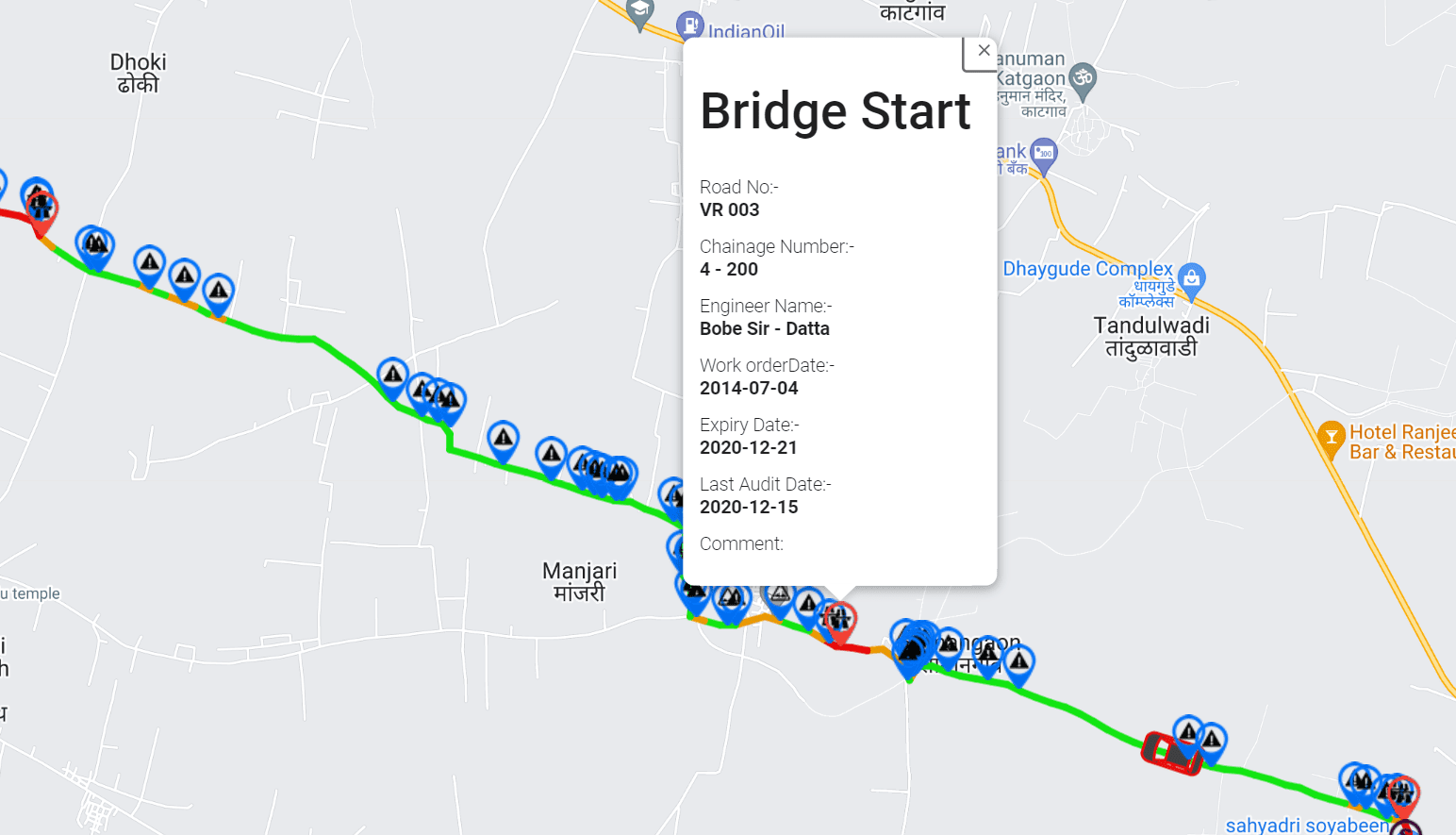
RoadBounce combines collected data with GIS to create interactive infrastructure maps showing:
- Road condition distribution
- Roughness trends
- Distress locations
- Maintenance history
- Asset condition
- Survey coverage
GIS visualization allows engineers and decision-makers to quickly understand where deterioration is occurring and how conditions vary across the network.
Instead of reviewing spreadsheets, stakeholders can explore infrastructure performance geographically.
Step 5: Continuous Monitoring Instead of Periodic Snapshots
Road infrastructure is constantly changing.
Heavy traffic, seasonal weather, utility work, and environmental conditions all contribute to pavement deterioration.
RoadBounce supports recurring surveys that create historical performance records for every monitored road.
Continuous monitoring enables agencies to:
- Track deterioration trends
- Measure maintenance effectiveness
- Compare conditions over time
- Identify rapidly deteriorating assets
- Monitor seasonal changes
This ongoing visibility supports proactive pavement management rather than reactive repairs.
Step 6: Infrastructure Analytics That Support Better Decisions
Collecting data alone does not improve infrastructure management.
The real value comes from transforming raw measurements into meaningful insights.
RoadBounce provides infrastructure analytics that help agencies understand:
- Which roads are deteriorating fastest
- Where maintenance budgets will have the greatest impact
- Which assets require further investigation
- Long-term pavement performance trends
- Network-wide condition changes
Decision-makers can prioritize investments based on measurable data rather than subjective observations.
Step 7: Maintenance Prioritization
Maintenance budgets are rarely sufficient to repair every road simultaneously.
Infrastructure managers must determine:
- Which roads need immediate attention
- Which roads can be monitored longer
- Which assets require preventive maintenance
- Where engineering surveys should be performed next
RoadBounce supports this decision-making process by highlighting priority locations across the network.
Rather than replacing engineering assessments, the platform helps agencies identify where detailed investigations should be focused.
This allows specialized survey resources to be deployed more strategically.
Step 8: Supporting Comprehensive Pavement Management
Effective pavement management requires current, reliable information across an entire road network.
RoadBounce supports pavement management by enabling:
- Network-wide screening
- Regular condition monitoring
- Historical trend analysis
- GIS-based asset visualization
- Maintenance planning
- Budget optimization
- Infrastructure performance tracking
By integrating these capabilities into a single platform, agencies gain a more complete understanding of asset condition throughout the infrastructure lifecycle.
Complementing Traditional Road Profiling Programs
Engineering-grade road profilers continue to play an essential role in infrastructure management.
They remain the preferred tools for:
- Detailed engineering investigations
- Acceptance testing
- Pavement design validation
- High-precision engineering measurements
- Construction quality assurance
RoadBounce serves a different but highly complementary purpose.
The platform supports:
- Network-wide road screening
- Continuous infrastructure monitoring
- Frequent road condition assessments
- Scalable smartphone-based surveys
- Maintenance prioritization
- Infrastructure intelligence
By identifying areas showing signs of deterioration, RoadBounce helps agencies determine where specialized engineering surveys can deliver the greatest value.
This complementary approach improves both efficiency and resource allocation.
Benefits of an End-to-End Road Monitoring Strategy
Organizations adopting an integrated monitoring approach can achieve numerous operational advantages:
- Broader road network coverage
- More frequent infrastructure assessments
- Earlier identification of pavement deterioration
- Better maintenance prioritization
- Improved budget allocation
- Data-driven asset management
- Reduced reliance on reactive maintenance
- Enhanced GIS visualization
- Continuous infrastructure intelligence
- Better coordination between field teams and decision-makers
These capabilities support smarter infrastructure planning while helping agencies make informed maintenance decisions.
The Future of Road Infrastructure Management
As transportation networks continue to expand, infrastructure owners require monitoring solutions that are scalable, repeatable, and data-driven.
End-to-end road monitoring combines smartphone technology, artificial intelligence, GIS mapping, and infrastructure analytics into a unified workflow that supports continuous pavement management.
Rather than relying solely on periodic inspections, agencies can maintain ongoing awareness of network conditions and respond proactively as roads change over time.
RoadBounce enables organizations to monitor entire road networks efficiently, collect valuable road condition data at scale, and prioritize maintenance based on objective infrastructure intelligence. Working alongside traditional engineering profiling programs, it helps road agencies optimize survey resources, improve maintenance planning, and make better-informed decisions that extend pavement life and enhance network performance.
Frequently Asked Questions
What is end-to-end road monitoring?
End-to-end road monitoring is a complete workflow that covers road condition data collection, pavement analysis, GIS mapping, infrastructure analytics, and maintenance prioritization to support informed decision-making across entire road networks.
How does RoadBounce collect road condition data?
RoadBounce uses smartphone sensors, GPS, and AI-powered analytics to collect ride quality and pavement condition data during normal vehicle operations, enabling scalable and recurring road surveys.
Does RoadBounce replace traditional road profilers?
No. RoadBounce is designed for network-wide screening, continuous monitoring, and maintenance prioritization. Traditional profilers remain valuable for detailed engineering investigations, acceptance testing, and engineering validation.
How does continuous road monitoring improve pavement management?
Continuous monitoring helps agencies identify deterioration earlier, track condition changes over time, prioritize maintenance investments, and determine where detailed engineering assessments are needed.
Who can benefit from RoadBounce?
Road agencies, municipalities, consultants, contractors, transportation authorities, and infrastructure owners can use RoadBounce to collect road condition data at scale, monitor pavement performance, and support data-driven asset management.


Leave a Reply